The human race has one gigantic bumper sticker slapped to its rusty, rear fender which reads: “I just want to be happy”.
That’s the real reason we haven’t had any first contact with aliens because any intelligent species reading that sticker is going to veer away from the planet.
Humanities’ first drug of choice is happiness. And post-Covid, the happy junkies are more hooked than ever in their search for everlasting bliss.
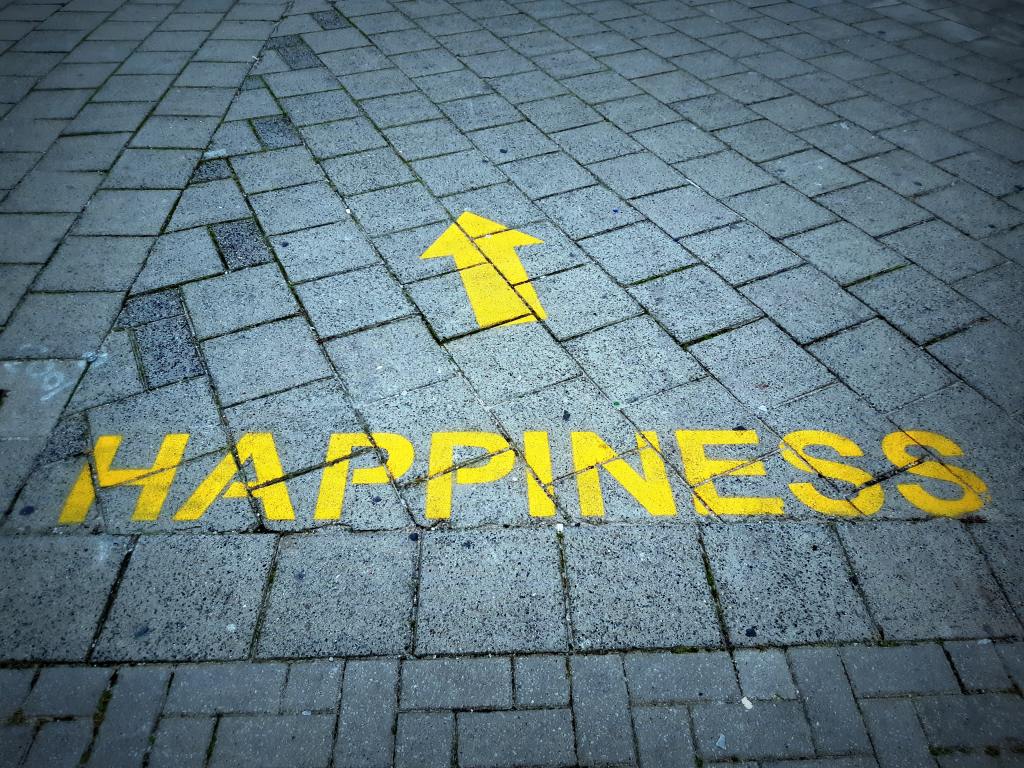
Every day we are bludgeoned with new ways to be happy, from podcasts, Ted Talks, books and apps. We are told to smile more, visualise everything and ask the universe to cure us of phobias like Anatidaephobia – fear of being watched by a duck.
Have more sex. Have less sex. Mind eat. Don’t eat. Eco parent.
Discard all our negative thoughts but for fucks sake go easy on the toxic positivity.
Yet, the more we desperately attempt to cultivate contentedness the more we experience a lethal dose of unhappiness.
I’m not saying the pursuit of happiness is worth neglecting but several brilliant thinkers believe our reckless desire to maintain an unrealistic level of jubilant jauntiness is foolishly contributing to our misery.
Jungian analyst and author James Hollis argues there is nothing wrong with happiness, but it isn’t a permanent condition.
“The goal to life is meaning, not happiness,” he said.
“It’s not a permanent condition, it’s a byproduct of being in right relationship to our souls at the time. And if you’re living in a way which is meaningful to you, from time to time, you’ll be flooded with meaning, even if the going is tough. And we all know that at some level because everybody has experienced it at some point.”
So let’s all listen to Dr Hollis and stop trying to be feckin’ happy.
And without trying to sound riotously subversive or macabre, our DNA doesn’t allow us to spend every waking hour feeling perky because otherwise we’d still be stuck up in trees giggling at our genitals.
Our DNA wants to survive and strife so it slips in a decent dose of misery and despair in an attempt to propel us on a more fulfilling trajectory.
Consultant and Senior Lecturer in Old Age Psychiatry at King’s College London, Rafael Euba, claims humans are simply not designed to be happy.
“Instead, we are designed primarily to survive and reproduce, like every other creature in the natural world,” he wrote in the Conversation. “A state of contentment is discouraged by nature because it would lower our guard against possible threats to our survival.”

But it’s difficult to ignore the happy, semiotic satellites around our orbits.
Happy birthday. Happy holidays. Happy meals. Endless happy memes. We were even told to “clap along if you feel like happiness is the truth”.
Sports people will always claim to be happy to be in a new team. Politicians are always happy when they lose. We pretend to be happy in front of our in-laws, kids and partners at times.
The drab, dreary uniformity of work creates fake happiness.
So why has obtaining happiness been such an instinctive human desire?
Probably the first person to marinate on the topic was the big man himself, Buddha.
Siddhartha Gautama first mistake was telling his followers it was going to take a lot of hard yakka to get even close to a glimpse of the shiny stuff.
So most of humanity just gave up.
Buddha believed we could achieve a sense of genuine well-being by cherishing others, but the altruistic great one didn’t have his vista polluted by influencers, celebrities and the movies of Tom Cruise.
But it’s not our fault we keep picking at the happiness scab. “Joy marketing” has hypnotised us to believe we are going to have the greatest orgasm ever if we buy that monstrous four-wheel drive, with the smiling singing idiots behind the wheel.
Despite the word happy being cannibalised and colonised by the marketers of joy, they know there is an inexhaustible wealth of ways to peddle happiness because humans have a sickening addiction to it.
Although most of us would have trouble distinguishing whether some ads were about a bank or a funeral home.
There is an obscene amount of money to be made from the happiness industry. In the United States alone, it is estimated to be worth $11 billion a year.
As Don Draper from TV’s Mad Men once boasted: “advertising is based on one thing – happiness.”
The extraordinarily gifted writer and academic Yuval Noah Harari believes the advertising industry, along with the mass media “may unwittingly be depleting the globe’s reservoirs of contentment”.
“…If you’re a teenager today your are a lot more likely to feel inadequate,” he wrote in Sapiens: A Brief History of Humankind. “Even if the other guys at the school are an ugly lot, you don’t measure yourself against but the movie stars, athletes and supermodels you see all day on television, Facebook and giant billboards”.
Humans are definitely the host in the parasitic relationship with advertising.
But as Harari bluntly points out: “Money, social status, plastic surgery, beautiful houses, powerful positions – none of these will bring you happiness.”
“A meaningful life can be extremely satisfying even in the midst of hardship, whereas a meaningless life is a terrible ordeal no matter how comfortable it is,” he wrote in Sapiens.

Both Harari and Hollis don’t offer up too many trade secrets when it comes to finding some depth of meaning in our lives. That’s ultimately up to us.
But both would agree it’s easy to avoid meaning because humans can self-medicate with all the fucken distractions that exist on our devices alone.
And the delicious irony is, despite being seduced by what Harari calls the “luxury trap” modern humans are at the back of the field in humanity’s happiness race.
The Israeli writer claims our Stone Age ancestors might’ve been more blissfully blithe because all they had to worry about was not becoming a meal for some 25-foot flesh-eating bird and finding a bit of grub to survive.
“Since humans generally use their capabilities to alleviate miseries and fulfil aspirations, it follows that we must be happier than our medieval ancestors, and they must have been happier than Stone Age hunter-gatherers, Harari wrote in Sapiens. “But this progressive account is unconvincing. As we have seen, new aptitudes, behaviours and skills don’t make for a better life”.
So even with all the titillating technology we can’t escape what Hollis calls “the swamplands of our soul”. “The savannas of suffering, that provide the context for the stimulation and the attainment of meaning.”
“We may well experience moments of happiness, but they are ephemeral and can neither be willed into being nor perpetuated by hope.”
I don’t begrudge anyone who hopes for happiness. I just don’t want to be around them when they come down.


 What's Happening Here
Leave a reply to Jeneds Cancel reply