-
Everyone needs to be outraged by the US Supreme Court’s historic attack on women’s rights

Photo by Colin Lloyd I have been grappling for days whether or not to write something about the Roe v Wade decision, which takes away the federal right for women to have abortion in the United States. It’s easy to be immediately filled with disgust given the court’s decision will have undeniably devastating consequences for women. The impact for women, particularly low-income women, in need of abortion care will be catastrophic. I felt uncomfortable and hypocritical tackling a topic that robbed women of the fundamental right to choose what they can do with their bodies. It would be dangerous and disrespectful of me to truly comprehend how deeply wounded women are feeling over the decision.
My ferocious, uncontrolled typing would always be interrupted by my conscience telling me, this is not my domain. Just back off.
But five days after the hideously barbaric Supreme Court ruling, I’m still consumed by rage and anger. And we all should be, given the human rights of women have been attacked.
What would men do if they were stripped off similar freedoms? Nothing, because there is no equivalent for men. We are left to do what we want with our clumsy bodies.
So at the risk of coming across as some virtue signaling, white guy, I decided I was going to write about how fucken outraged I am by a decision that thrusts women right back into the 1790s.
Women should have the right to do whatever the fuck they want with their bodies. Full fucken stop. End of the fucken argument.
And fuck you America?* I mean, you’ve set the bar pretty low at times with your lust for guns, overt racism and unleashing Donald Trump on the world. But now you have really fucked up. You have delivered women a brutal blow by taking away their choice to have an abortion.
Almost half the states are expected to introduce laws to restrict or ban access to abortion. The Bible Belt will be drowning in moonshine.
Western states have pledged to enshrine the abortions rights and create a safe haven for women seeking abortion.
Clinics all across American have already started closing down. Some have threatened to fight the ruling and remain open. It’s hard to imagine the standoff lasting long, with the authorities lurking on every corner trying to weed out any illegal operations.
Former President Donald Trump, who handpicked three of the conservative judges on the Supreme Court, has vulgarly taken credit for the outcome. Enough said.
The ruling sent a rupture throughout cities across American, with thousands of women suddenly jolted out their homes, as if hit by a gigantic pulse from the earth.

Photo by Gayatri Malhotra Protests have already erupted across America. Pro-choice demonstrators will hit the streets in major cities and smaller towns over the weekend. The inflammable rage will linger for months. The United States has underestimated the exact people, whose fundamental rights it has taken away.
The protests in the states have been peaceful but there was an incident of a car driving dangerously through marchers in Iowa. Sadly, it’s likely to happen again.
Two days after the Supreme Court decision, hundreds of young people protested outside the US consulate in Perth. It was the first rally of its kind in Australia. There is another march planned for Perth this Saturday. Other states are planning to hit the streets over the weekend as well.
Maybe Perth felt an obligation to jump out of the blocks first because WA is the only Australian state that hasn’t fully decriminalised abortion. It has not updated its abortion laws since 1998, which means a women seeking an abortion must get the approval of two medical professionals at any point up to 20 weeks of gestation. After 20 weeks, a panel of six doctors will rule if the abortion is necessary. The rules are clearly outdated, but legislative change isn’t happening soon.
The latest Supreme Court ruling will undoubtedly pave the way for other women’s rights to be stripped away. Justice Clarence Thomas called on the Supreme Court to reexamine cases allowing both LGBTQI rights as well as the right to contraception.
Despite the hauntingly relevant claims by many the Supreme Court decision could plunge parts of the United States into a real life Handmaid Tale’s, that won’t happen just yet. Protesters will continue to voice their fury and anguish over the US Supreme Court ruling, in an attempt to snatch back their missing rights. It is looming as a long and bloodied battle.
But as the tyrannical villain Aunt Lydia in the Handmaid Tale likes to say: “the world can be quite an ugly place”.
*Ok, conservative lawmakers.
-
What do you call a white, rugby-loving, Christian in his 50s? An Australian Prime Minister.

Voters might have tuned into the leaders’ debate, if they could find them. Photograph: Lukas Coch, Mick Tsikas/AAP by Brendan Foster
What do you call a white, rugby-loving, Christian in his 50s on election night? Australian Prime Minister. I have no idea if that’s an original punchline, but it made me laugh, pretty damn, hard.
Puerile political gags aside, there is something undoubtedly unpleasant, about the glaring lack of political diversity. But at some point on Saturday night, it’s either going to be Albo or ScoMo. If you missed the opening joke, it might not be worth reading on.
But when did Australian politics become so hideously beige?
I mean, heck, all of Australian political history is teeming with white, privileged guys in their autumn years, running or ruining this beloved country of ours. So, ScoMo and Albo shouldn’t really come as a shock to us all.
What is mildly disturbing, is the two real contenders to become PM, are modelled on 1950s, church-going, door to door vacuum cleaner salesmen.
Australia might not be as diverse and progressive as we like to think we are.
But surely we deserve something a little more charismatic then a couple of daggy dads to choose from? But every election over the last 10 years, political parties always dust off daggy dad 2.0 and put on new coat and hat.
But we, the public are given the political parties the information to construct these clumsy caricatures of Mike Brady from the The Brady Bunch. Aren’t the parties just “building” what we told them to do? I mean, dear god, I think we need to be a bit worried by the “us’ out there.
So the political heavyweights, bunkered down in their party rooms, drooling over the latest marketing campaigns aimed at men, always come up with the same answer.
Maybe Labor and the Libs have a supercomputer like Deep Thought from the Hitchhiker’s Guide to the Galaxy and feed it thousands of surveys and polls and ask the 7 million-year-old computer what would make the perfect leader in Australia?
Not surprisingly, both parties got the same answer.
Political parties have become so paralysed by their own internal polling they truly believe we would find an unappealing, uncharismatic, white guy, engaging.
The everyday, relatable bloke. Harmless. Innocuous. Slightly charming.
If you worked or knew of an Albo or ScoMo there is no way you are inviting them over for a beer. If you came home from work and your partner casually mentioned either one of them was coming over for dinner, it would induce such a feeling of terror that would end up moving out.
Albo and ScoMo are nice enough folk and all; they’re just so excruciatingly boring.
Everyone knows one. The guy that will write something personal in a card when you leave work. He’s the secretary of the local cricket club that married the first girl he kissed at 15. He’s had the same haircut since he was 21. Never took drugs. Loyal. Has the morals of Mother Teresa and probably studied economics at university.
He is so admirably affable that you have to stop yourself from wanting to punch him in the nose.
So now you have this ungraspable, indescribable urge to quarrel with every 50-year-old man you bump into at the local shops.
So we end up with two, military-drilled, neurotic dads on the campaign trial for six-weeks begging for our attention, while we do everything to avoid them.
The campaigns of Albanese and Morrison have been so sterile, transparent and formulaic that voters aren’t even bothering to tune in. (I have no doubt voters would’ve tuned into the three leaders’ debates, if they could’ve found them.) Even the odd gag, seems orchestrated.
It’s been like watching two slightly-tipsy, insecure men, slap each other at a BBQ for 40-odd days. I never envisaged a gladiatorial-style campaign but given “I’m paying for admission” I expect to see a contest.
There are a number of dynamic and brilliant journalists’ in this country telling captivating, political stories. Even for the best, it’s been a hard sell.
Others have become blinded by the quick hit of a “gotcha question” and the thirst to become part of the story.
So you can forgive voters for being absent-minded when it comes to politics, if journalists are firing uninspiring questions that will never unearth inspiring answers.
In Milan Kundera’s wonderfully, poignant book Immorality, he said “the journalist is not merely the one who asks questions but the one who has a sacred right to ask, to ask anyone about anything. I will therefore make my statement more precise: the power of the journalist is not based on his right to ask but on his right to demand an answer.”
Clearly, something has been lost along the way.
Look voters, I know you are disengaged, disconnected and well, basically exhausted after dealing with a relentless pandemic, but this is not your fault. Everyone can go back to knitting and baking sourdough.
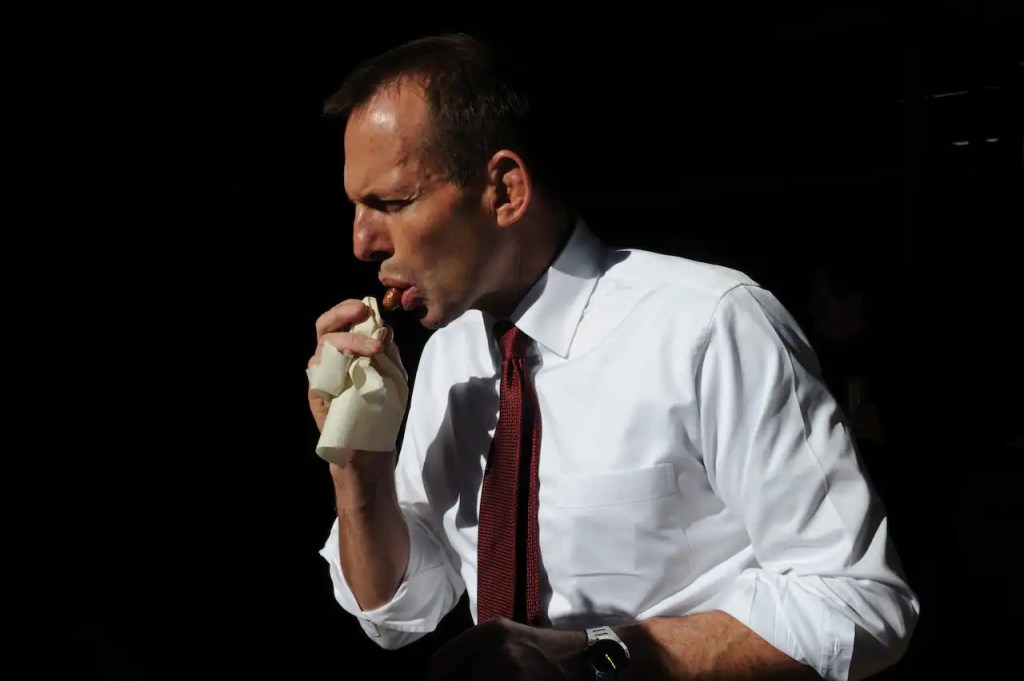
Former PM Tony Abbott getting very personable with his democracy sausage. Source: AAP / DEAN LEWINS/AAPIMAGE You have earnt the right to quaff as many democracy sausages as you like. Turn up to the polling booths in your ugg boots, with a stinker of a hangover for all I care. Gracefully sidestep, caffeine-jacked, volunteers trying to shove how to vote cards into your stomach.
You are fulfilling your part in the democracy dance. But no matter how hammered you are, it’s hard to dance to the crap music being played by the two majors.
Political parties haven’t updated their record collection for 10 years.
Now, hang tight, while I serve up some unbearable nostalgia or “arc of nostalgia” as Albanese would say, but there was a time when talking politics involved a certain depth of anger and passion. “Nup, he’s a wanker, can’t stand him” then some eloquent reason why. People are still calling our leaders’ wankers but it’s not backed up with a reason. They simply don’t care.
More than 17 million Australians are now enrolled to vote. How many of those actually decided to tick above or below the line, will be left for the statisticians.
The increasing disconnection with Australian politics is alarming and depressing.
To be fair to politics, it has been hard to focus and feel optimistic these last two years because of the virus. We’re all a bit hungry and fatigued. So when we do glance up at the political stage, we kind of shrug our shoulders and go, ‘meh’.
Buy hey, the next election is only three years away and by then we shall all feel invigorated and refreshed. The only problem will be, you will only able to really vote for two daggy dads.
-
Despite West Coast’s horror season, Adam Simpson deserves to be at the club next year.
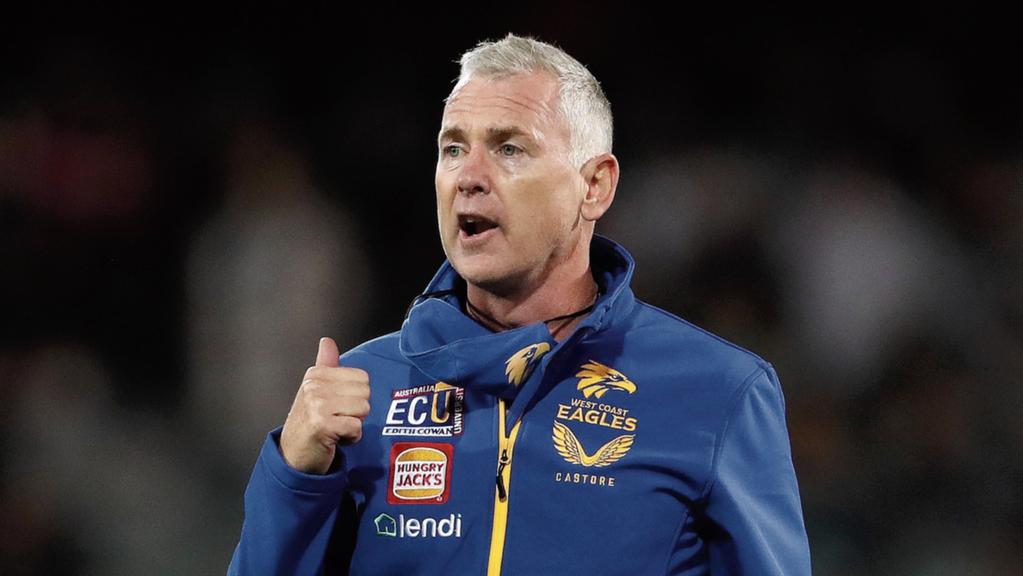
(Photo by Sarah Reed/AFL Photos) West Coast Eagles coach Adam Simpson can’t take a trick.
It’s hard to remember an AFL coach having to combat such an onslaught of misfortune after just seven rounds. The Eagles have been savaged by injuries and ravaged by Covid-19.
There appeared to be a glimmer of hope with the club’s stunning win against the Pies in round four. The victory quickly turned sour with the news star ruckman Nic Naitanui damaged his knee in the dying seconds of the game, ruling him out for up to 12 weeks.
Just when you thought West Coast’s disastrous season couldn’t get anymore abysmal after the Tigers demolished the Eagles last Friday night, Simpson tested positive to Covid.
The 2018 premiership coach will miss the clash against the Brisbane Lions on Saturday night. Remarkably, Covid and injuries has reduced the Eagles to just 22 fit players.
West Coast’s farcical season has truly dipped into the bizarre. You almost expect to hear the Eagles’ bus was abducted by aliens en route to the Gabba.
But the endless calamities endured by West Coast are putting undue pressure on Simpson. Sometimes, it’s not the coaches’ fault.
The growing cackling chorus of AFL commentators calling for him to be sacked is unjust. Simpson deserves to be at the club next season, based on their Covid battle alone.
Eagles’ football manager Gavin Bell said in a statement on Thursday the club had ventured into “unprecedented times”. The comment requires no hyperbole.
“As it stands we have 22 available AFL-listed players with the remainder either injured or in AFL Health and Safety Protocols,” Bell said. “The club has eight staff and players – including Greg Clark who made an impressive debut last week – currently in AFL Health and Safety protocols.”
The injury-ravaged Eagles will again have to access their 20-player contingency list just to put a team on the park against the red-hot Lions.
Skipper Luke Shuey and dynamic small forward Willie Rioli will also miss the game with hamstring injuries.
West Coast’s horror season continued on Thursday after the club had to postpone their WAFL match game against East Fremantle on Saturday because the Eagles can’t provide the minimum three AFL-listed players.
You wouldn’t begrudge West Coast for waving the white flag.
There is denying the Eagles have served up some shocking performances so far this season. But even the harshest critics of West Coast’s woeful form would agree the club has had a terrible run of injuries and COVID-19 dramas.
Only veteran Shannon Hurn and former Richmond player Patrick Naish have turned out for every game. And Naish only signed on for the Eagles in March via the pre-season Supplemental Selection Period.
But despite the club being plunged into a Covid-crisis, some commentators haven’t wasted time putting the boots into Simpson.
AFL shock jock Kane Cornes said West Coast should sack Simpson and have a “massive crack” at four-time premiership coach Alistair Clarkson. It’s hard to take Cornes seriously at times, given the former Port Adelaide provocateur dishes up some controversial claptrap once a week.
But Cornes isn’t alone. Former Fremantle Dockers great and respected footy commentator Paul Hasleby said West Coast should part ways with Simpson.
The Eagles shouldn’t be drawing up the divorce papers just yet.
It is abundantly clear West Coast have underperformed since winning the premiership in 2018. And the club’s managing of their list has been dubious at times.
The Eagles “sold the farm” to get former Geelong player Tim Kelly to the club in 2019 in the hope of winning another flag. Given Naitanui, Andrew Gaff and Brad Sheppard missed the 2018 Grand Final, recruiting Kelly appeared to be a smart move.
Kelly has been serviceable but West Coast’s premiership window has been slammed shut and the house has collapsed.
Simpson has also come under fire for his unimaginative game plan which many football pundits have called “outdated”. And West Coast’s lack of top draft picks means there isn’t a lot of young talent coming through. There are still doubts whether the club’s first-round draft pick from last year, Campbell Chesser will even play this season.
There is no disguising the fact West Coast have been horrible in most games. The club will more than likely win their second wooden spoon this year.
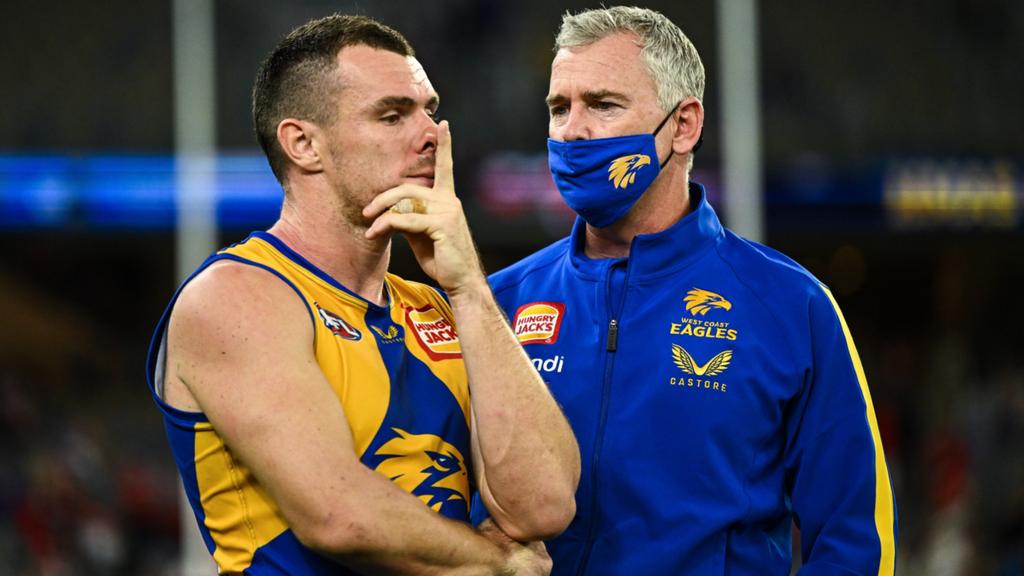
Skipper Luke Shuey has been ruled out of the Brisbane Lions game with a hamstring injury. (Photo by Daniel Carson/AFL Photos) Simpson’s coaching style hasn’t always been impeccable but West Coast have only missed the finals twice during his nine year reign. He coached the Eagles to a losing grand final in his second season and won the flag three years later. Most clubs would take that in spades.
Simpson is contracted until the end of 2024 but the “jungle drums” will be beating louder around him if the Eagles continue to get thumped in the coming weeks.
He doesn’t deserve it. But AFL clubs aren’t in the business of being charitable to their coaches after finishing last.
The Eagles just need to pull out the red pen and put a line through 2022. Everything that could go wrong has.
Simpson should be able to redeem himself next season. But not all AFL coaches get the redemption they warrant.
-
The importance of anger: the curious tale of the man who put dog poo in my letterbox
Have you ever felt yourself recklessly careering towards a baffling moment of volcanic anger that goes beyond understanding? I’m not talking about some senseless, unprovoked act of pure violence. Just a microscopic episode of rage which triggers a series of truly bizarre events. A brief rupture in our “ground rules” that causes a “why?” moment.
Mine involved a guy shoving a poop bag with dog shit into my letterbox. You can understand why I got fixated on the “why”?
I was sitting out the front swilling a G&T, on one of those late days in March when the south westerlies had finally given up the ghost for the summer and there is a warmth and glow about the afternoon. I happened to glance up at the precise moment a man walking past my house with a woman and two pooches, hastily poked something into my letterbox.
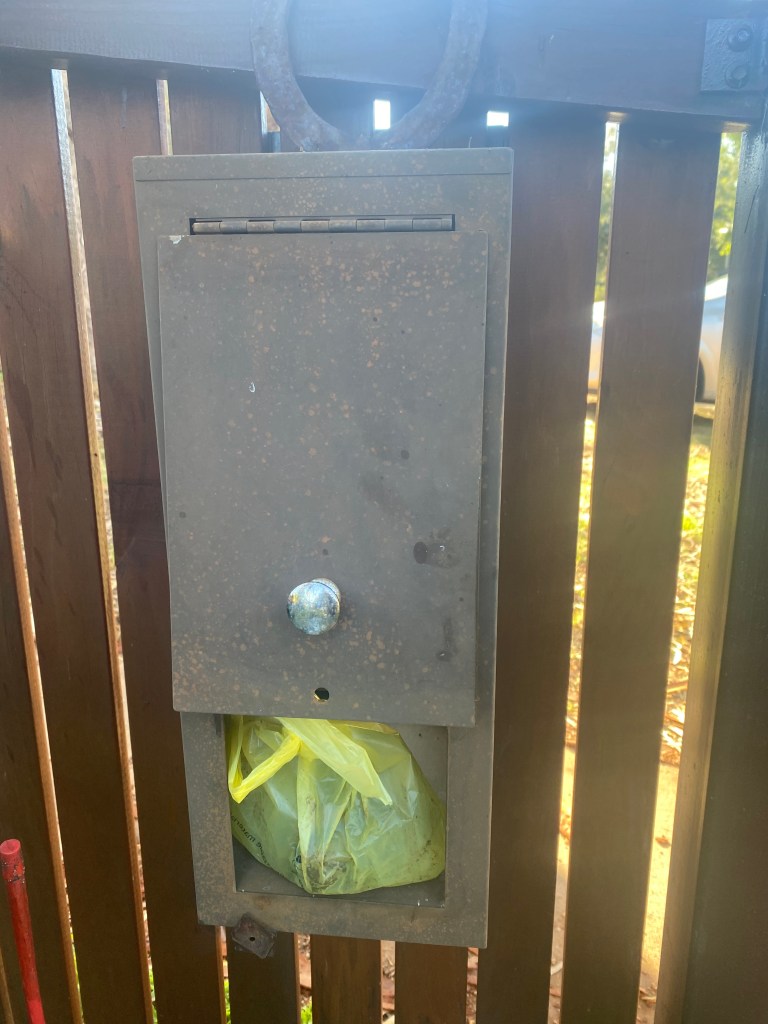
You’ve got mail!
There was something about his lingering, sneering smirk that instantly made me think, this guy isn’t inviting me to join Neighbour Watch. He had the look of man that was delighted with his effort. His swaggering smugness told me everything.
The second I spied the poop package I bolted after him with a combustible storm consuming every sinew and muscle.
“Hey, mate, why did you shove dog shit in my letterbox?” I bellowed again and again. My haranguing pleas elicited nothing.
He finally raised his right arm in an arrogant display of contempt and told me “to put it in the bin yourself”. At no point did he turn to face me.
A great fury sprung from nowhere. The dismissiveness of his gesture summoned a hopeless anger that rarely reveals itself. I delivered up a series of profanities and insults that would’ve confused comedian Lenny Bruce.
He came to a sudden halt. I had no desire for this to erupt into violence. It was clear the guy has lost his moorings.
He looked like someone that would do my tax.
He timidly shoved his chest against mine, like a confused Emperor Penguin trying to have sex for the first time. Sigmund Freud believed anger was an important emotion, which related to, you guessed it, the anal stage in our development. So in turn, we should direct our frustrations at our parents who failed to potty train us. It also might explain why some of us are weirdly repulsed by the thumbs up emoji.
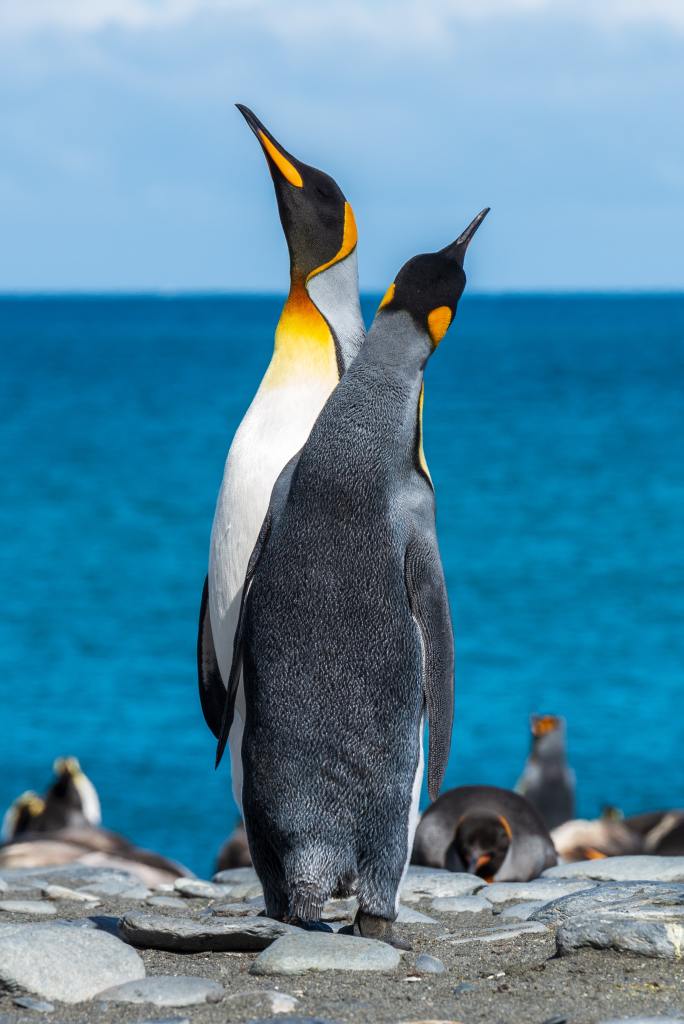
Emperor Penguins. Photo by Paul Carroll The guy kept shamelessly thrusting his body into me with his arms by his side. It looked like he was doing a Riverdance mime. His bullish confidence was his minor failing. I wasn’t too sure if the grunting and slurping noises he was making were meant to intimidate me, or he was having a mild stroke.
He had the awkward stance of someone who spent much of their youth hiding in cupboards at boarding school, trying to avoid getting beaten up by the captain of the rugby team.
He could sense I was seeking the pleasures that comes with redemption. I had the uncontrollable urge to thrust the pooch poo bag down his throat.
I could see the headline now: “A man in Fremantle is in a critical condition after a plastic bag containing dog droppings was removed from his airwaves. “Witnesses say an ape-like person was seen limping away from the scene.
“Animal Rescue has yet to trap the escaped ape”.
I walked away, just as my son came bursting through the front gate as if suddenly noticing my absence.
Any attempts to disguise my disgust from my son would be futile. He innocently thought it was an early April Fools’ joke. It was an easy out.
I bunkered down in the back room with my uncontrolled mind thumping with anger.
Anger is a curious beast. Everyone has their triggers. Everyone’s moral code has been breached. (Actually come to think of it, would anyone be overly delighted to come home and find Fido’s faeces in their letterbox?) The aggressive gene is part of our DNA. It’s our ancestors’ fault. It wasn’t long ago that most hunter and gatherer societies were riddled with bloodshed.
Archaeologists believe that because of the scariest of food and resources hunter and gatherers waged war on neighbouring tribes. Then the vanquished probably dined out on their neighbours.
I have another less plausible theory. As our dim-witted descendants hadn’t developed the art of agriculture yet, everyone was cooped up in a cave all-day long with bugger all to do. They were bored shitless and hated each other.
Even a brainless, prehistoric nomad can only endure so many cave paintings. “Oh look, Torg has drawn another Woolly Mammoth.” Yay. “Come outside Torg, I want to show you my new hunting club”.
I was trying to recover some equanimity but I just couldn’t digest why a person would do such a disrespectful, dreadful deed? The velocity of my confusion kept accelerating to the point where I thought, maybe “mailing” dog shit is some strange and uncanny TikTok craze. I even Googled it. (Don’t Google it, you will lose faith in humanity) I was becoming increasingly irrational when I heard a rattle on the flyscreen door.
I could see a figure fidgeting in the dark. I knew it was the guy.
He put up his arms with the urgency of a soldier wanting to surrender. His contemptuousness had evaporated. He knew he fucked up.
Again, I asked the simple question ‘why’? He said he was embarrassed and humiliated and offered up no excuses, other than repeating ‘sorry’.
Depositing a full dog shit bag into my letterbox was borne out pure laziness. He seized on the opportunity.
His contriteness and vulnerability were sincere and authentic. He then apologised to my son. I didn’t have the appetite to make him squirm any more.
He shook my hand like a politician on a failed campaign trial. That was all I needed.
The next day an expensive bottle of wine turned up on our decking. No note was needed.
The man has not walked past out front gate with his two dogs since. If I did see him, I would probably grin and give him a wave.
We all make mistakes. We all get angry.
-
Are “gotcha” moments turning voters off politics?
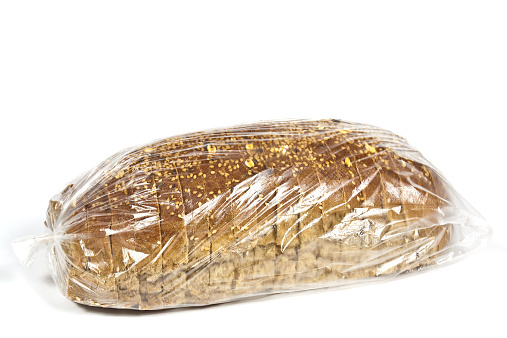
Does anyone know the price of a loaf of bread? The endless, orchestrated attempts to ensnare politicians in ‘gotcha’ moments are becoming banal and taxing.
On the first day of the election campaign, the chirpy and upbeat Anthony Albanese was asked about the unemployment and cash rate.
The Labor leader nervously twitched like a kid caught gobbling down a chocolate bunny on the Saturday before Easter. You could see it on his face. The opposition leader didn’t know the answer to a question which was hiding in every leaders’ tool box.
There is no denying Albanese should’ve given the correct answer. Basic economic figures are political leaders bread and butter.
Albanese’s spin machine then spun the blooper into a positive, with the kid from Camperdown claiming “people make mistakes”. Yep, we all do. It’s just our mistakes are rarely seen by millions.
He momentarily steadied the ship. But whatever ground he made up quickly evaporated after storming out a presser after eight minutes, looking like he needed to feed the parking meter.
Politics can be a game of inches.
Albanese exiting stage right was the fodder some sections of the media pack wanted to gorge itself on.
But other than fixated and nervous news outlets, most voters aren’t spending their time marinating on the answers to uninspiring questions from journalists. And this isn’t going to come as a surprise to most, but the constituents throughout Australia simply don’t give a rat’s arse about politics.
The journalist was doing their job grilling Albanese. Journalists have an enormous responsibility to provide people with verified information and issues that impact our lives. Most journalists I’ve met took the ethics and responsibility of the trade very seriously. There are few things more intimidating then a ruthless journalist trying to unbury ‘buried’ news.
There are few shrinking violets in the journalism game.
Many more talented journalists than me, have skewered politicians with astute and precise questioning. I’m not convinced the pop quiz-style of journalism at pressers is doing that.
Headline writers then jostle for a witty but captivating headline, to get ma and pa voter, who don’t give a shit about politics to click on the story. A bit of “chum” hurled into the water to lure readers onto the boat, unaware stakeholders are holding the fishing rods.
But the ‘gotcha’ moments become like a virus and starts to spread to every press conference that follows. It’s turning into “quick Mr Morrison, pull my finger”.
The important questions are submerged by the continual barking from journalists asking a party leader what they think about the fact, they didn’t know the facts?
But I’m struggling to find anyone who is genuinely invested in these moments or would change their voting habit because of an economic blunder by a pollie.

Even former PM John Howard couldn’t care less about Albanese’s blooper Even after a journalist asked former Prime Minister John Howard what he thought of Albanese’s forgetful moment he said “so what”. And I’m positive the question wasn’t about a Miles Davis song.
And if you just spent seven years lost in the wilderness and staggered into a shopping centre in the boondocks and saw Howard, you’d know an election was on.
And then there’s this old chestnut: “how much is a loaf of bread”? Prime Minister Scott Morrison was unable to answer that question recently when he popped up at the National Press Club. To be honest, I have no idea what a loaf of bread would cost. And what loaves are we talking about?
Morrison said he wasn’t going to pretend that he ducks down to the corner shop each day to fetch bread and milk.
How many times do you see a party leader shuffling out of their local deli in their tracky dacks and ugg boots balancing a couple of loaves of bread and milk?Leaders of most political parties wouldn’t have a clue what ma and pa voter are forking out on basic items because they live on exorbitant wages and allowances.
This nonsensical expectation that our Prime Minister or opposition leader are pondering the cost of basic food items is ludicrous. Or they have some intuitive insight into the daily struggles of Mr and Mrs average.
I like to think I have an ok grasp on politics, having previously covered a couple of elections for Fairfax Media. In AFL-speak, I’d be the medical-sub.
But I wouldn’t be far off the mark to suggest families around the country aren’t having the following conversations if a leader doesn’t know the cost of bread.
“Did you know Diedre, our Mr Morrison – that church-loving, respectable man doesn’t know the price of a loaf of bread”?
“Whose dead, George?”
“No one’s dead my dear. Mr Morrison couldn’t tell the nice person gathered around a large tree with all those other nice people, what the cost of a loaf of bread was”.
“Do we need bread George?” Sincere apologies to Monty Python.
By the middle of the first election week, Green’s leader Adam Bandt had a gutful after a journalist tried to leave him exposed and defensive with a question about the wage price index. Bandt snarled ‘Google it’, when asked. I had to Google what it meant.
Bandt said elections should be about a contest of ideas. “Politics should be about reaching for the stars and offering a better society,” he said, as if he saw the question coming delivered in a neat package.
As grandiose and unachievable as that is, it’s a good point.
I think it’s a fair call to say a sizeable chunk of the Australian public are disengaged with politics. Take your pick of the reasons why.
Most of the people I know will robotically waltz into the booths on May 21 and vote the same way as they did at the previous five elections. But rusted-on voters are losing their grip. The swinging voters are having all the fun.
Gotcha moments aren’t turning people away from politics because most folk aren’t looking. If Australian politics was on Survivor it would get voted out in the first week for being annoying and prosaic.
But laying out booby traps hoping to entangle another politician in a ‘gotcha’ moment has become orchestrated and predictable. It might not be the defining reason why most people are dispassionate about politics, but it’s not helping.
-
Do 4WD and SUV drivers ‘bully” smaller cars?
Since recently purchasing a pint-size jalopy, I started to notice a strange and unnerving phenomenon. Small car bias. I’m here to tell you, driver discrimination against miniature motor vehicles is real.
I openly confess my mechanical knowledge is crap. The most I could tell you about our new wheels is there is the number two in the title. Given the low number stamped on the back of the car, you are right in guessing it comes up to the door handle of most giant jalopies.
Before getting our mini motor there was some sincere chatter about it being more environmentally-friendly and that we could always hire a bigger one if we ever wanted to go to dinner as a family.
My relationship with cars is uncomplicated. I hate them. I was never someone that chased the instant and lavish gratification that goes with getting a new one.
My first ever car was a 1957 HK Holden, which broke down about 500 meters from where I bought it. I walked back to the guy’s house who sold it to me, but he mentioned something about Pit Bulls and possibly removing some of my teeth.
I looked like the lead sing of Spandau Ballet and the guy could sense I was about to start sprinting down the street in my shiny loafers screaming, ‘help’
Since the Holden, I got by on cheap cars bought off people planning to move overseas or over east or the odd person in witness protection.
I can honestly say I’ve never personally owned an SUV or 4WD. Why have I mentioned these types of vehicles? Because all the pent-up proclivity targeted at the vehicular challenged is from SUV and 4WD owners.
I wanted to put my newly found, small car bias to the test, so I headed towards the intersection at the end of my street which is like some spiritual T-junction nirvana. Vehicles of all makes and models will gleefully let you in and even give you the follow-up wave.
The other day I gave a driver in a chunky 4WD a Wiggles-like wave, already pre-thanking him for letting me into the flowing traffic when he sped up. His two-tonne, beast rattled forward, snarling smoke and the guttural sounds of spooked elephants.
He even scowled at me in the rearview like I was a runt of the litter and I should know my place. I told myself not to read too much into it. I’ve annoyed a lot of people in my time, so it simply could be that.
The next day I was indicating the length of Canning Highway trying to get into the right line, but anytime I found the tiniest of openings a 4WD would magically appear.
I was positive the buggers were having all small cars tracked.
In a surprising moment of rationality, I kidded myself I was just experiencing that frequency illusion called Baader-Meinhof. That strange anomaly where you see hipster’s around Fremantle wearing pants halfway up their ankles and no socks, and then you see hundreds of them.
And there has been the odd occasion when children have whispered to their mothers, “is that Hagrid driving that teensy car, mummy”? So it could be that?
Baader-Meinhof was coined by the professor of linguistics at Stanford University, Arnold Zwicky. It turns out years later Zwicky suffered from the Dunning–Kruger effect – the cognitive bias whereby people overestimate their ability to spot things.
So maybe I’ve just been spotting more 4WDs and SUVs?
According to the Federal Chamber of Automotive Industries, more than 50 per cent of cars on Australian roads are SUVs. (Let’s be honest I’ve never seen a 4WD in Perth with dirt on it.) That is a staggering amount of cars, but surely not all of them want to ram me off the road?
In 2005, the Australian Institute put out a paper (I shit you not) claiming city drivers of large 4WDs are “morally more conservative and less community orientated than other drivers.” “They are more likely to dislike homosexuals, have less regard for Indigenous culture and are less sympathetic to public and charitable support for disadvantaged people.”
Given it was published around 17 years ago, I don’t think it’s a fair representation of all 4WD owners today. I have seen many drivers throw coins at homeless people for washing their windscreens at traffic lights.
The most sacred territory for large terrain vehicles is the school drop-off. It’s their natural habitat. You will see them slumped in the middle of the road, in front of people’s driveways and parked on top of midget mobiles. Navigating these colossal carriers in a miniature mobile is like facing the German Panzer Tank division in a tricycle.
But it’s not just the owners of beefed-up buggies who are prejudiced against us ‘smallies’. Pedestrians have cultivated their own form of intolerance.
Walkers will happily stroll in front of my car, confident that any collision would result in only a minor inconvenience for them and certain death for me.
A young woman in a carpark just stepped off a kerb and stopped in front of me as I was eyeing off a small car bay. She looked the vehicle up and down as if waiting for clowns to burst out the back doors and boot.
But surely there would be some automobile affinity between the brothers and sisters in bite-size buggies?
The first time I pulled alongside another compact machine I expected the person to stare at me like an animal realising it was not the last of its species.
It was clear the driver behind the wheel of the car had been “bullied” by 4 bangers for years, because he peered straight ahead, trapped in his daily, depressed torpor.
I looked for signs of life. Some gesture. A knowing nod and maybe “hey, cool car.”
But no one who owns a petite ride will ever hear someone say, “hey, cool car.
He gently drove away as if Lucifer himself was holding onto his testicles.
But some drivers in pocket-sized vehicles are invisible to the small car bias. Older drivers in jalopies that were popular when Robert Menzies was PM. And young drivers in new, swanky, bright-coloured compacts, which colour-blind 4WD owners mistake for Mr Whippy vans.
There is something admirable about the spirit and vigour of folk that drive monstrous motor cars to the local bottle shop and back.
Just the next time you see a small, white jalopy with a number two on it somewhere, indicating the distance of Conrad Straight at Bathurst to get into another line, maybe just ease up the pedal. I promise no one will notice.
-
Omicron is like catching a cold right? Think again
So Covid-19 arrived at our house recently. Omicron came to our doorstep via some unvaccinated imbecile who I’m positive collected bits of aluminium foil to make tin hats. One of those hapless morons that think Covid changes your DNA and we all eventually morph into lizard creatures. Yet this same nincompoop that refuses to get the jab probably has a fridge full of LSD, Ecstasy, meth and enough bottles of amyl nitrate to the stop the beating heart of a Blue Whale.
It’s been less than two weeks since my oldest daughter tested positive to Covid. She is still chronically ill. Others in the household rapidly collapsed as if they were viciously kicked by some savage, pitiless animal.
Oh, for the record we are all vaccinated.
Western Australia recently recorded more than 7,000 Covid cases with the peak expected at the end of March. Thankfully, few have died from Omicron in WA. There is the possibility the Covid wave could recede with minimal damage but after becoming intimate with the virus I wouldn’t be getting all warm and cosy just yet.
The common narrative around the Omicron variant is the symptoms will mimic the run-of-the-mill cold. For some, that may be true. From my personal experience, I can tell you that it is a virulent, dangerous and unforgiving disease.
For the last week the house has been a symphony of guttural vomiting, moaning crying, and the crackle and pop of Ibuprofen and paracetamol packets. We have single-handily caused the shares of pharmaceutical companies to go up.
Every so often my wife and my oldest son would stagger out of their rooms looking like they spent the last two hours wrestling with a Grizzly Bear. I’ve never witnessed such a profound or irrevocable commitment just to get a glass of water. There would be a half-hearted grin and a wave of the hand like a gentle, undemanding zombie. An eerie silence fell over the place. I’ve barely seen them.
It gets hold of you. I can only imagine what a more lethal virus could do to you. Well, I don’t have to, because millions of people around the world have already perished because of this relentless, unstoppable disease.
I was clearly the lucky one. I went down for around three days. The first 24 hours involved me trying to remember the words to the Lord’s Prayer and Googling organic burial pods. I lay in bed clutching my head in my hands with such force Edward Munch would’ve found the image to ghastly to paint.
The nerves in my eyes were throbbing so violently I almost expected to wake up and find the cat playing with one of them after it popped out of my noggin. Yet, despite all debilitating symptoms of Omicron, I feel compelled to tell you that after two PCR swaps and two Rapid Antigen Test (RATS), I’m still negative.
Before you mock me as some babbling, blithering idiot who just had a mild virus, my wife had five PCR tests before testing positive. There is an unpredictability with Omicron that most of us are yet to fully understand.
My youngest son wasn’t so lucky. One moment he was enraptured by something on the TV, before uncontrollably vomiting with a brutal aggression I’ve rarely seen. He violently threw up for the next five to six hours. I was enveloped with a ferocious fear and dread I hope you never have to experience. If panic has an edge, I was hovering over it.
I frantically rang a number of health hotlines and medicos who all assured me what my son was experiencing was a normal symptom of Covid. As I was tiptoeing back to my son’s room through a minefield of spew, I wished I trusted my parenting gut and rushed him to hospital. I was blind, foolish and submissive.
My son is slowly recovering. Other families might not be so fortunate.
In a moment of inexplicable lunacy, I attempted a foolish PSA on Twitter to warn folk about the potential perils of Omicron. For those that don’t have Twitter, it’s where all social media sewerage flows into.
My tweet became a battle ground for those bunkering down behind their keyboards just waiting for the right moment to bleat on about the ill-effects of 5G. The vulgarity, emptiness and repetition of moronic comments brought on a bottomless dissatisfaction that few of us go searching for.
Don’t get me wrong, there were elegant gestures of kindness and support, but there was an essential unquantifiable ingredient missing: facts.
Trying to wade through the information or misinformation about Omicron can be exhausting. If you think I’m being nothing more than a morose, over-sensitive, self-absorbed fool, then just pop onto the World Health Organisation (WHO) page if want some credible and reputable information on Omicron. The WHO debunk a few myths, particularly this notion that catching the disease is nothing more than a common cold. The WHO claim people infected with the Omicron variant are still ending up in hospital and many have already died.
Another comical conspiracy theory exposed by the WHO is this ludicrous idea that vaccinations don’t work against Omnicom. The lower rate of hospitalisations and deaths from the virus is because so many people are being vaccinated.
The WHO has one final warning for those unvaxxed. Omicron will seek you out. For the vaccinated who are becoming fatalistic and resigning themselves to getting infected, don’t. You might get lucky and feel nothing more than a common cold. Or, you might get unlucky. But I can tell you that Omicron is anything but ‘common’.
-
Why hasn’t anyone done a biopic or documentary on “The Woodies?”
Having a peak at the Australian Tennis Open this week I must have suffered some mild cognitive malfunction because I became obsessively fixated on the same thought.
Why has no one done a television biopic or documentary on “The Woodies”?
For anyone under 30, “The Woodies” – was the nickname given to Todd Woodbridge and Mark Woodforde – one of the greatest combinations in tennis history.
I can say with a high degree of confidence this tennis duo would easily slide into the most desirable of categories Aussies reserve for their sporting Gods: GOAT.

Todd Woodbridge(left) and Mark Woodforde winning the Final of the Mens Doubles at the French Open, Roland Garros, Paris
Credit: Clive Brunskill/ALLSPORTThe story about the Woodies writes itself, as the showbiz saying goes. It is TV gold.
It all started pretty crap. The pair got thumped in their first match together in 1990.
In the early days, there were moments when the right and left-handed combination appeared to move across the court with the speed, elegance and grit of Russian ballet dancers trying to defect from the USSR.
Despite an unconvincing start, by the time Woodforde hung up his racket 10 years later, the sporting tandem had won 11 grand slam titles together, including six Wimbledon.
During a dominating decade on the court, The Woodies finished with a staggering 61 ATP tournaments, an Olympic Gold medal and a Davis Cup.
Both players are in the Australian Tennis Hall of Fame and are immortalised in bronze statues outside Melbourne Park.
Even though Woodbridge’s one looks like a young Ricky Ponting.
That is half the show right there. Episodes one to three are in the can.
The next three episodes could unpack their ruptured friendship after their playing days. Woodforde’s yearning pleas in the media to rekindle their on-court love affair. Woodbridge claiming he is still chummy with his old doubles partner.
Who doesn’t want to see that on the small screen?
I am not talking about some dumbed-down, demented and exaggerated made-for-TV melodrama. Several talented Australian writers, producers and directors could deliver an intriguing, enthralling, emotional retelling of their lives.
However, if there is going to be an honest reimagining of The Woodies, we cannot just woefully ignore their frosty relationship.
Maybe some TV executives from a major streaming service are putting together a script as I type. I am experiencing that synchronised moment, called multiple discovery where two people from opposite ends of the earth came up with the same idea.
Like when mathematician Gottfried Leibniz discovered calculus around the same time as Isaac Newton. DreamWorks releasing Antz six weeks before Pixar’s A Bug’s Life. (That very calculated phenomenon is referred to as, Twin Films in cinema land).
If a TV miniseries that dramatised The Woodies lives got the green light, there is that troublesome problem of casting actors who grew up playing stuff all sports.
You can make an actor look admirable and worthy playing a musical instrument or riding a horse, but unsporting thespians tend to come across as gangly, uncouth and jarring portraying athletes.
I become an avid reader after watching actor Jim Holt’s painfully awkward imitation of English firebrand Douglas Jardine in the 1984 TV series Bodyline.
There is a dazzling array of wonderful Australian actors that could play the major characters in the Woodies’ biopic. (Although, given women are portrayed as “cheerleaders” in male-dominated, sports biopics, it might not be a sort after role for some actors).
Australian actor Jacob Elordi who is garnishing attention for his brilliant performance as Felix in the movie Saltburn could play Woodforde.
Lee Halley who is magnetic as Gus in the Netflix series Boy Swallows Universe would be a shoe-in to portray Woodbridge. He already has a mullet.
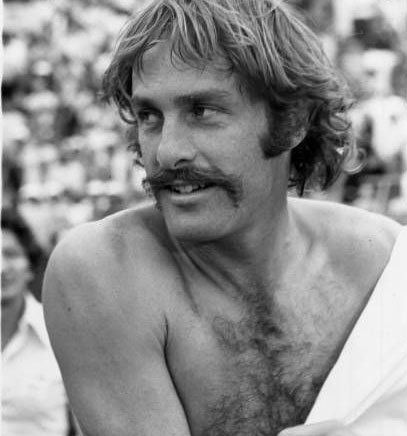
John Newcombe Given the legendary John Newcombe was the Davis Cup captain in 1999, when the Woodies helped the Aussies win the cup for the first time in 13 years, he would need to be wedged into the series somewhere.
I have Hugh Jackman pencilled in to play Newk. The Wolverine actor is probably not going to win an Emmy Award for his role (remember, the Eddie the Eagle movie?) but could easily grow a dirty, Sanchez mo in a few days.
(Benedict Cumberbatch would be my first pick, but the fans would tune out if an Aussie did not play Newk).
Sweden’s Jonas Bjorkman, who teamed up with Woodbridge later in his career would be a key player in the show, as he appears to be at the centre of The Woodies’ bitter fallout.
If the rumours are true, Woodforde is gutted his old sparring partner kept playing with the Swede on the legends tour instead of himself. One of the 17 or so Skarsgård siblings could portray Bjorkman.
The plot might need an injection of creative enthusiasm, as Todd and Mark were always charming, erudite and obnoxiously polite on and off the court.

Hard to envisage “The Woodies” racking up on a piece of Louis XV1 furniture I just could not imagine either of them snorting coke off a piece of Louis XVI furniture in some swanky Paris hotel after winning the French Open.
Then ringing reception and saying. “Hey, it’s one of the Woodies here. “We are expecting 15-20 women who are extras in the musical version of Coyote Ugly that is currently showing at the Théâtre du Soleil.
“Just show them up to our room when they arrive. “Oh, and send up 47 bottles of champagne.”
Undoubtedly, that would be a ratings winner but it sharply departs from the truth.
You would be more likely to find a leaked sex tape of Fat Cat and Percy Penguin online than anything nefarious about The Woodies.
Ok, Woodbridge had that mild misdemeanour where he spent a night in the slammer in Atlanta in the lead-up to the 96 Olympics, for a misunderstanding with a female guard at the games.
Far from compelling viewing.
If streaming services are reluctant to stump up the coin for at least a six-part mini-series, then a GoFundMe needs to be set up for a documentary.
It could be Australia’s answer to The Last Dance – the docuseries that chronicles the rise of superstar Michael Jordan and the 1990s Chicago Bulls.
Even the four-part documentary Beckham is undeniably brilliant. I mean for the love of God, if documentarians can make Posh Spice and former Manchester United star David Beckman look fascinating and surprisingly captivating, imagine the story of The Woodies.
Someone needs to make it happen. Now.
-
Let’s get some meaning and purpose into our lives before we start shoving cereal in our undies
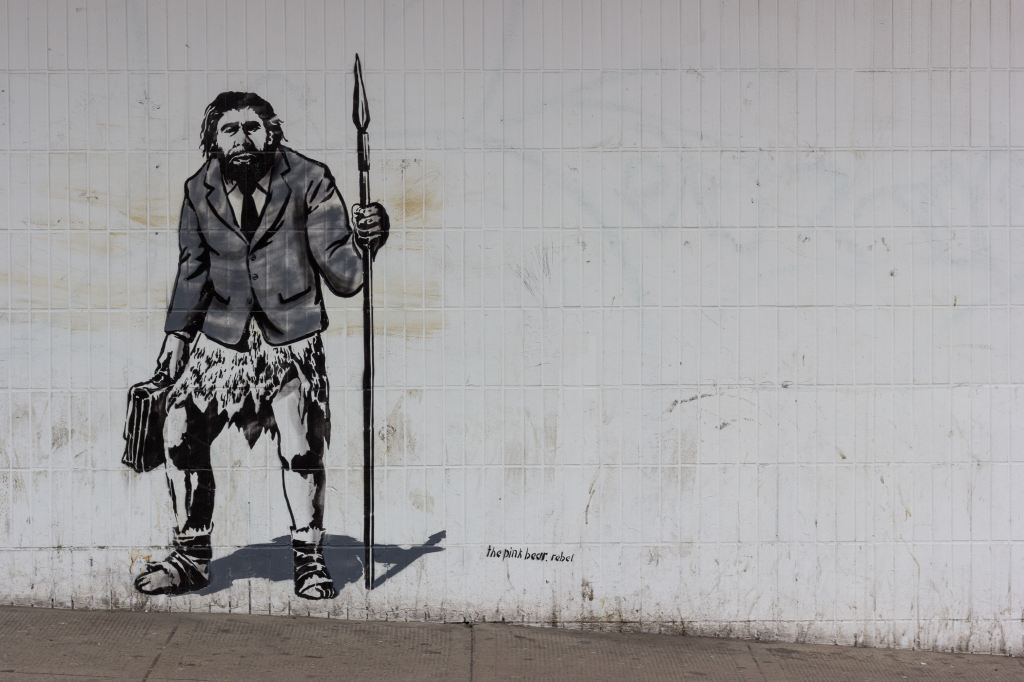
Humans have been searching for meaning and purpose every since we climbed down from the trees. Photo by Crawford Jolly on Unsplash. Meaning and purpose.
Those two, big, juicy, forcible words should nag the bejesus out of us Homo sapiens long before our malfunctioning mushy brains start thinking that pouring muesli into the front of your undies is a splendid way to begin the day.
However, humans tend to ignore that irritating, furious ranting inside their noggins with a tolerable degree of folly. It is not a fundamental failure to dutifully dismiss any search for meaning and purpose. It’s just ill-advised.
And if we stubbornly refuse to seek out these two philosophical pillars there is a good chance you’ll morph into a vapid imbecile that gets their high jinx by watching folk imitate goats on TikTok.
Feel free to rebuff what I’m saying but that awkward desolate feeling that comes and goes during those stages of agonising boredom is part of your genetics.
Our DNA is designed for human enhancement so our genes are urging us to overcome the unending, feckless futility of our existence.
A few minutes after our first ancestor scampered down from a tree and felt the dirt between their hairy crooked, toes, they were jolted upright by a random, cerebral spark that trigged our first ever thought: What the hell are we doing here?
For more than two millennia thinkers have been haplessly urging us humans to pursue some meaning beyond the humdrum buzz of our daily lives.
I have little authority to give some pithy and warm explanation on the topic other than being heavily influenced and swayed by what I’ve read.
There are a lot of brilliant writers blabbering on about the subject but no one has illustrated the point with more self-destructive clarity than Viktor Frankl in his book Man’s Search for Meaning.

Viktor Frankl’s book is chillingly confronting but also very inspiration. Photo by Pop & Zebra on Unsplash The Austrian neurologist and psychiatrist was confronted with relentless grotesque brutality at the hands of the Nazis in Auschwitz. It’s an unpleasant and harrowing read but Frankl’s resilience and self-belief are illuminating and inspiring.
I was scratching out some half-arsed, pseudo-intellectual wank about meaning and purpose when Frankl’s name popped up in my social feeds and then texts between friends days later.
Those moments of synchronicity the father of analytical psychology Carl Jung warns us not to ignore.
“Synchronicity is the coming together of inner and outer events in a way that cannot be explained by cause and effect and that is meaningful to the observer,” he wrote.
I’d never read Frankl but one passage from his book has been quoted by numerous writers when wanting to examine how that delightful, wretched thing called meaning can be found in almost any situation.
Frankl is on a train bound for another death camp when the Jewish prisoners erupt with spontaneous joy as the caboose veers away from the camp with the chimneys.
Their chances of survival just went up a little. There is no crisp or upbeat way to put it.
It’s a story worth retelling again and again.
“And, when they arrived at the new camp to learn it had no oven, no crematorium and no gas chamber,” Frankl wrote. “We laughed and cracked jokes in spite of, and during, all we had to go through in the next few hours.”
There have been several books penned by people displaying reckless bravery and courage despite the abhorrent suffering in concentration camps.
I read Primo Levi’s If This is Man in my early 30s and I may be going out on a ledge here, but it’s possibly one of the most important books ever written.
It should be compulsory in Year 12 English classes, but I fear a generation of youths would end up raising giant guinea pigs in South America.
The book left such a deep imprint on me that I felt compelled to anonymously write the bleakest Levi quotes I could find, on whiteboards where I was working at the time. Unsurprisingly, it immediately depressed anyone that read them.
I stopped when a recently divorced co-worker, shaking his nicotine-stained fist in fury, loudly declared he was going to stab the Levi-writing bandit in the eye with a spoon if he happened to meet them.
Levi doesn’t want us to forget. Frankl implores us to find some meaning.
Frankl wrote the book in nine days after finally making his way home to Vienna only to find out the Nazis had murdered his pregnant wife, his brother, both his parents and most of his friends.
Originally he didn’t want his name on the book.
Out of Frankl’s endless suffering, he developed the psychological theory called, logotherapy. It teaches us to not only thrive and survive in the grimmest of circumstances but also to discover our meaning in life.
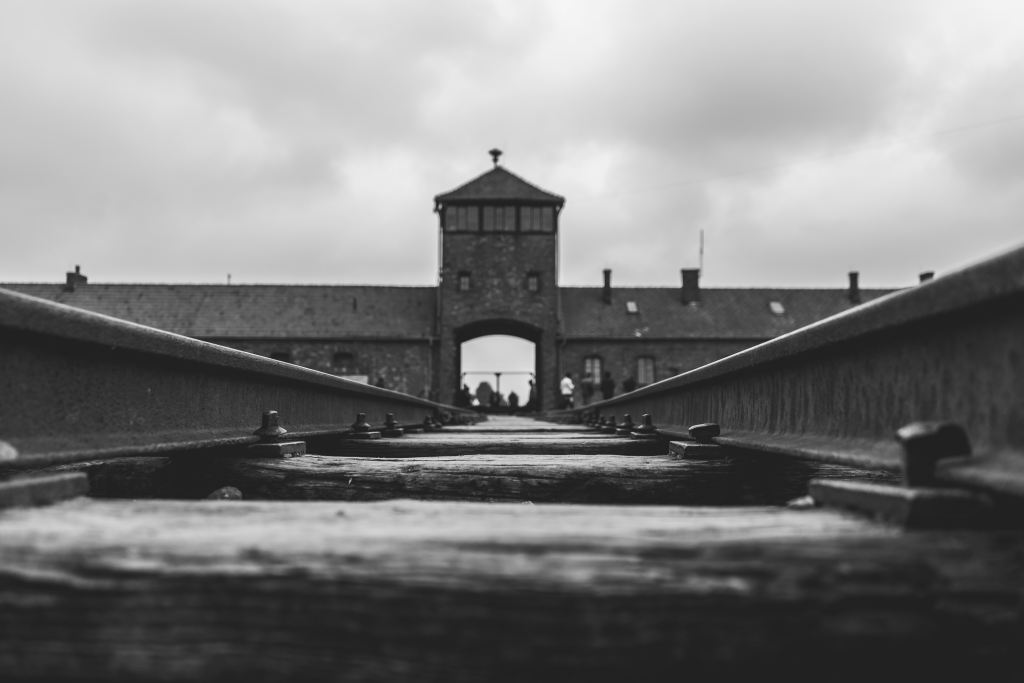
Auschwitz. Photo by Karsten Winegeart on Unsplash. “Ultimately, man should not ask what the meaning of his life is, but rather must recognize that it is he who is asked,” Frankl wrote. “In a word, each man is questioned by life; and he can only answer to life by answering for his own life; to life, he can only respond by being responsible.”
If we can’t find any meaning we are left with an existential vacuum.
We are not expected to endure the horrors and unimaginable trauma of Frankl to fill the void that may lurk inside us. He also explores what he dubs the “Sunday neurosis”. The gloominess that envelopes folk around mid-afternoon as they remember how empty and meaningless their life is without work.
There is even the example of the frightening aftermath that awaits those people whose identity is solely wrapped up in their work.
They’re recognisable in the workplace. The ungracefully ageing, bad joke teller who is fascinatingly unbalanced. Let’s call him Harold.
Harold confuses even the bluntest of greetings as a chance to launch into a well-orchestrated, dumb as fuck joke, that he’s told every person on his floor.
It would make an interesting premise for a sci-fi novel where people are instantly evaporated after telling the same gag twice in one day.
That’s why the retirement age is 65 to save office workers around Australia the daily torture of working 15 inches away from a guy who has recorded every episode of Hey Hey It’s Saturday.
Then one day Harold hangs up the boots, with one final piss up down the pub, before juggling some $80 bottle of scotch and a giant card in the back of an Uber.
After a few cheery, hopeful days, a strange, ever-mounting sense of dread starts to grip him.
A week later, he hits peak despair when suddenly seized by an ugly realisation the only joy in his life was pondering whether to purchase a three-way ladder after watching an info commercial on some bland, mid-morning talk show.
That’s some serious, heavy-duty private agony and I doubt there is a machine powerful enough on the planet to pluck Harold from that pit of sorrow.
So let’s not lead an ordinary, fragile, purposeless existence like Harold.
Frankl argues you can’t avoid suffering like good old Harold but we can fundamentally change our attitude towards it.
“Life is never made unbearable by circumstances, but only by lack of meaning and purpose,” he wrote.
“We needed to stop asking about the meaning of life, and instead to think of ourselves as those who were being questioned by life — daily and hourly.”
Or we can just be oblivious to everything and eventually be content filling up our undies with muesli. It’s up to you.
-
As the coffee-gathering subcultures evolve, which caffeine clan do you belong to?
Around 9.27 am on most work days, a peculiar migration occurs in the Perth CBD.
Thousands of office workers embark on their morning trek, driven by their maddening, libidinous desire to consume, overpriced, milky coffee.
If you look closely you can see the tracks and ruts carved out of stone and concrete left by the dawdling medley of mammals making their daily novena to coffee shops.
The caffeine sojourn has taken on a religious tone. It’s become a daytime event steeped in ritual and ceremony.
Our coffee injections form the basis for critical socialising and social interaction, which sociologists have dubbed: I can’t be stuffed working just yet.

Which coffee do you drink? Photo by Nathan Dumlao on Unsplash The Swedes even have a term for it: Fika. Which roughly translates to coffee and cake. Some historians believe the Nordic country abandoned its socialist experiment in the 1990s because nobody worked after Fika.
Humans have been devoted to that delicate black bean ever since an Ethiopian goat herder called Kaldi first discovered their potential around 500 years ago, after watching goats trying to leap off a mountain after chowing down on the berries.
We have been rarely uncaffeinated since.
The coffee break has replaced the water cooler as the psychological totem where people have censorious conversations about their ever-mounting desires to murder their bosses.
But somewhere along our espresso evolution, humans have devolved into coffee-gathering subspecies with their obscure modes of expression.
There are the recent graduates: Also referred to as the Pink Flamingos of coffee drinkers given their inability to get java without the company of 12 other people.
Get out of the way, I need my coffee. Photo by Dattatreya Patra on Unsplash They chat while getting their coffee, roaring like Howler Monkeys with overhasty conversations because everything is still unprocessed excitement. Life is not yet a series of dispiriting compromises for this endless gregarious bunch.
Everything is still a recent first. First sex. First drugs. First time listening to Radiohead’s Kid A; watching the movies of Scorsese or reading the books of Henry Miller, Charles Bukowski, Germaine Greer and Zadie Smith.
I’m not convinced these chirpy bastards even enjoy coffee. Their numbers tend to dwindle dramatically as predators find them easy to chase as their disturbingly powerful enthusiasm makes this group slow to move.
But whatever these gladsome graduates are drinking it’s usually with almond milk.
Watching the Beef on Netflix and rummaging through their parents’ closets looking for 80s clothes.
Recent parents: The most feared species of them all. Have heedless disregard for everyone except their barista. Identifiable by the dried, baby vomit on their left shoulder and the look of someone that has been coming down from meth for six months.
Usually hunt in packs of four to six.
Other subspecies have tried to infiltrate this group but are usually torn to shreds by profoundly corrosive conversations about pelvic floors and failed vasectomies.
The coffee of choice is black. The bitter the better. Not watching or reading anything because they’re usually in bed by eight.
Middle-management millennials. This group has two very distinctive characteristics: keep cups and wokeness.
Still renting. No kids. Just came back from working in the UK for five years. Small cryptocurrency portfolio and volunteer at camps for kids that couldn’t get into exclusive, western suburb private schools.
Urban anthologists believe this socially and politically aware group has thrived and overcome any compelling challenges because its members have developed a potent defence mechanism that evolves around being unbearably annoying. As such, the species has no natural predators.
Ironically watching Grey’s Anatomy, the Bachelor and can’t wait to tell everyone how they wept through episode three of The Last of Us.
Preferred coffee: Long black, long mac and will drink iced coffee from a straw.
Empty nesters: Either lamenting not having the kids at home or searching for the number of their old weed dealer. Tend to get their brain juice in small groups.
Travelling back to Europe but staying in classy Airbnb’s instead of hostel bunk beds, as they did in their mid-20s. Picking up the guitar again and started felting highland cows and sheep.
Trigger happy when it comes to showing their workmates pictures of their grandkids.
Have an infinite lust for cappuccinos. These kid-free folk are the natural enemy of recent parents.
Nearly retired. It wasn’t that long ago when members of this group were left to die next to a tree with a coconut and a small stick to fight off any Saber-Toothed tigers.
The older java junkies are uniquely incapable of forging bonds with people, so will usually hide in nearby bushes waiting for other coffee drinkers to skedaddle.
When not torturing their colleagues with their self-serving blather about retirement, this group spends most of their day Googling: “Why does it hurt when I do this?”
Will get a cup of Joe solo or with another oldster. Usually men. Intolerant, misanthropic and a lot of chatter revolves around Led Zeppelin albums.
Will drink only flat whites because is unaware any other coffee exists. Watching the Beatles Get Back doco for the third time.

Older java junkies are hiding waiting their turn. Photo by Toa Heftiba on Unsplash. There are another subspecies of caffeine consumers that rarely undertake any coffee odyssey, so they’ve devolved into underground outcasts like the Morlocks in the H.G. Wells book, the Time Machine.
These creatures are mute to the coffee chatter because no buoyant banter has ever unfolded while waiting 30 seconds for the bean juice to heat up in the microwave.
Will always get their cup of mud alone.
I have zero statistical evidence to back up this next statement, but I have developed no meaningful relationships with instant* or pod drinkers*.
I’m sure there is a panoply of psychological reasons why these folk never decamp from their desks but given their imperturbable nature most work colleagues have come to the same unbudgeable verdict: these banal beverage drinkers are flavourless.
And spying a workmate sheepishly sauntering back down a corridor with a lukewarm cup of instant has all the existential charm of a character in an Albert Camus novel.
Tend to watch shows about serial killers and Survivor.
If you want irredeemable evidence these subspecies and others exist just take a stroll around Perth any time after 9 am.
You might just find your coffee clan.
* Apologies to KA and SM.
-
Why is our search for ever-lasting happiness post-Covid making us miserable?
The human race has one gigantic bumper sticker slapped to its rusty, rear fender which reads: “I just want to be happy”.
That’s the real reason we haven’t had any first contact with aliens because any intelligent species reading that sticker is going to veer away from the planet.
Humanities’ first drug of choice is happiness. And post-Covid, the happy junkies are more hooked than ever in their search for everlasting bliss.
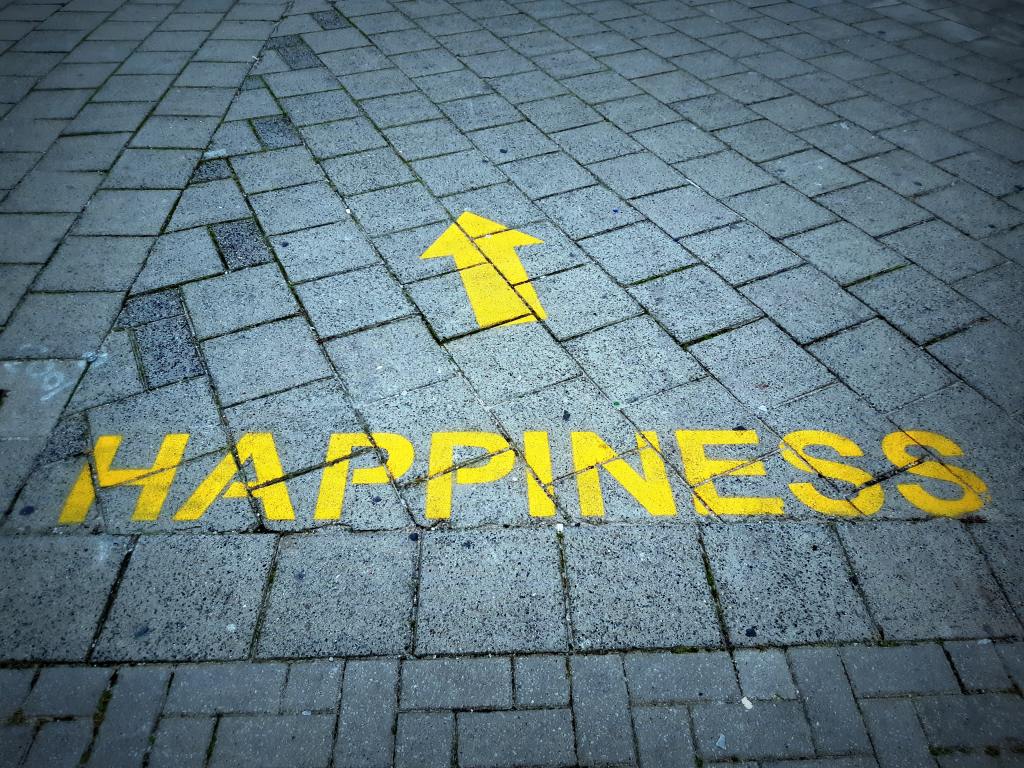
You are going the wrong way. Photo by D Jonez Every day we are bludgeoned with new ways to be happy, from podcasts, Ted Talks, books and apps. We are told to smile more, visualise everything and ask the universe to cure us of phobias like Anatidaephobia – fear of being watched by a duck.
Have more sex. Have less sex. Mind eat. Don’t eat. Eco parent.
Discard all our negative thoughts but for fucks sake go easy on the toxic positivity.
Yet, the more we desperately attempt to cultivate contentedness the more we experience a lethal dose of unhappiness.
I’m not saying the pursuit of happiness is worth neglecting but several brilliant thinkers believe our reckless desire to maintain an unrealistic level of jubilant jauntiness is foolishly contributing to our misery.
Jungian analyst and author James Hollis argues there is nothing wrong with happiness, but it isn’t a permanent condition.
“The goal to life is meaning, not happiness,” he said.
“It’s not a permanent condition, it’s a byproduct of being in right relationship to our souls at the time. And if you’re living in a way which is meaningful to you, from time to time, you’ll be flooded with meaning, even if the going is tough. And we all know that at some level because everybody has experienced it at some point.”
So let’s all listen to Dr Hollis and stop trying to be feckin’ happy.
And without trying to sound riotously subversive or macabre, our DNA doesn’t allow us to spend every waking hour feeling perky because otherwise we’d still be stuck up in trees giggling at our genitals.
Our DNA wants to survive and strife so it slips in a decent dose of misery and despair in an attempt to propel us on a more fulfilling trajectory.
Consultant and Senior Lecturer in Old Age Psychiatry at King’s College London, Rafael Euba, claims humans are simply not designed to be happy.
“Instead, we are designed primarily to survive and reproduce, like every other creature in the natural world,” he wrote in the Conversation. “A state of contentment is discouraged by nature because it would lower our guard against possible threats to our survival.”
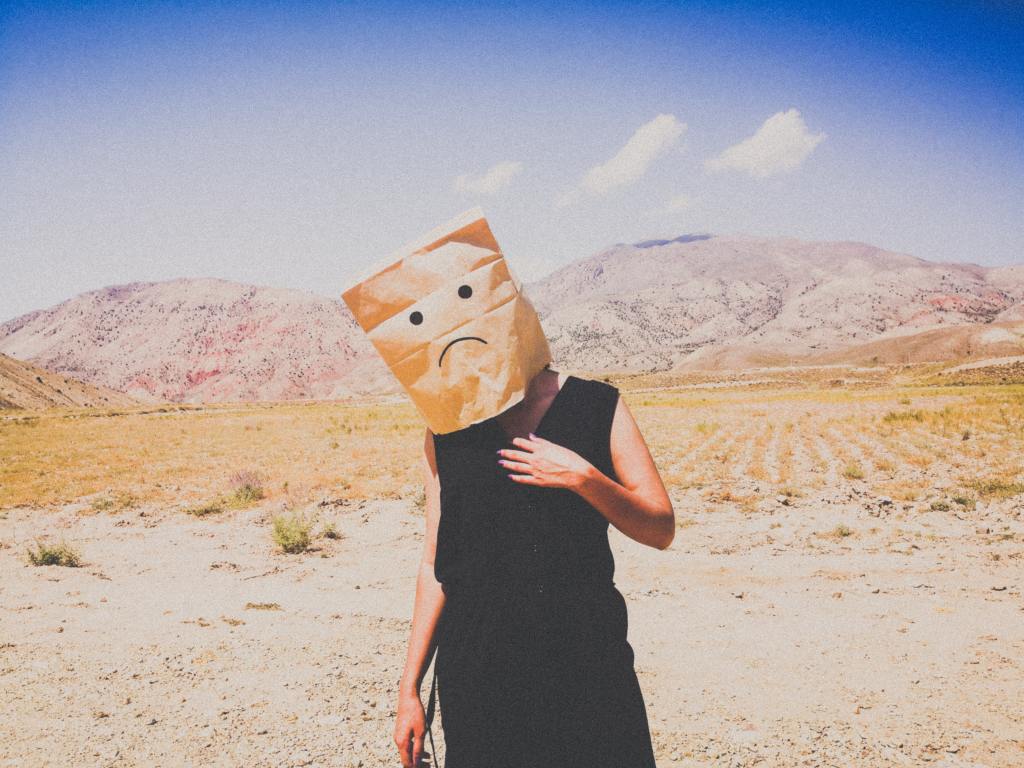
Humans are not designed to be happy. Photo by Arash Payam But it’s difficult to ignore the happy, semiotic satellites around our orbits.
Happy birthday. Happy holidays. Happy meals. Endless happy memes. We were even told to “clap along if you feel like happiness is the truth”.
Sports people will always claim to be happy to be in a new team. Politicians are always happy when they lose. We pretend to be happy in front of our in-laws, kids and partners at times.
The drab, dreary uniformity of work creates fake happiness.
So why has obtaining happiness been such an instinctive human desire?
Probably the first person to marinate on the topic was the big man himself, Buddha.
Siddhartha Gautama first mistake was telling his followers it was going to take a lot of hard yakka to get even close to a glimpse of the shiny stuff.
So most of humanity just gave up.
Buddha believed we could achieve a sense of genuine well-being by cherishing others, but the altruistic great one didn’t have his vista polluted by influencers, celebrities and the movies of Tom Cruise.
But it’s not our fault we keep picking at the happiness scab. “Joy marketing” has hypnotised us to believe we are going to have the greatest orgasm ever if we buy that monstrous four-wheel drive, with the smiling singing idiots behind the wheel.
Despite the word happy being cannibalised and colonised by the marketers of joy, they know there is an inexhaustible wealth of ways to peddle happiness because humans have a sickening addiction to it.
Although most of us would have trouble distinguishing whether some ads were about a bank or a funeral home.
There is an obscene amount of money to be made from the happiness industry. In the United States alone, it is estimated to be worth $11 billion a year.
As Don Draper from TV’s Mad Men once boasted: “advertising is based on one thing – happiness.”
The extraordinarily gifted writer and academic Yuval Noah Harari believes the advertising industry, along with the mass media “may unwittingly be depleting the globe’s reservoirs of contentment”.
“…If you’re a teenager today your are a lot more likely to feel inadequate,” he wrote in Sapiens: A Brief History of Humankind. “Even if the other guys at the school are an ugly lot, you don’t measure yourself against but the movie stars, athletes and supermodels you see all day on television, Facebook and giant billboards”.
Humans are definitely the host in the parasitic relationship with advertising.
But as Harari bluntly points out: “Money, social status, plastic surgery, beautiful houses, powerful positions – none of these will bring you happiness.”
“A meaningful life can be extremely satisfying even in the midst of hardship, whereas a meaningless life is a terrible ordeal no matter how comfortable it is,” he wrote in Sapiens.
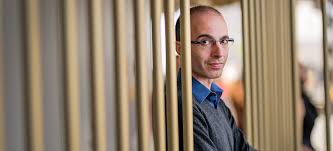
Author Yuval Noah Harari. Both Harari and Hollis don’t offer up too many trade secrets when it comes to finding some depth of meaning in our lives. That’s ultimately up to us.
But both would agree it’s easy to avoid meaning because humans can self-medicate with all the fucken distractions that exist on our devices alone.
And the delicious irony is, despite being seduced by what Harari calls the “luxury trap” modern humans are at the back of the field in humanity’s happiness race.
The Israeli writer claims our Stone Age ancestors might’ve been more blissfully blithe because all they had to worry about was not becoming a meal for some 25-foot flesh-eating bird and finding a bit of grub to survive.
“Since humans generally use their capabilities to alleviate miseries and fulfil aspirations, it follows that we must be happier than our medieval ancestors, and they must have been happier than Stone Age hunter-gatherers, Harari wrote in Sapiens. “But this progressive account is unconvincing. As we have seen, new aptitudes, behaviours and skills don’t make for a better life”.
So even with all the titillating technology we can’t escape what Hollis calls “the swamplands of our soul”. “The savannas of suffering, that provide the context for the stimulation and the attainment of meaning.”
“We may well experience moments of happiness, but they are ephemeral and can neither be willed into being nor perpetuated by hope.”
I don’t begrudge anyone who hopes for happiness. I just don’t want to be around them when they come down.
-
AI media kept generating lousy press this week and it wasn’t just Nick Cave giving bots the middle finger
If an artificially intelligent (AI) bot was writing about synthetic media this week, the headline would read something like this: Humans really don’t care about us, except an Australian dark overlord called Nicolas Cage*.
When The Brag Media CEO Luke Girgis recently announced on Linkedin it was planning to “experiment” with AI-generated content, media outlets barely blinked.
It had nothing to do with the entertainment publishing company’s decision to reveal the news on that particular platform. Although I’m guessing the networking site was deliberately chosen because most of the benign comments left by its users could have been written by an AI bot.
Most news outlets were ambivalent towards The Brag boosting about using AI tools for content, because well, it simply wasn’t news.
We’ve read it all before.
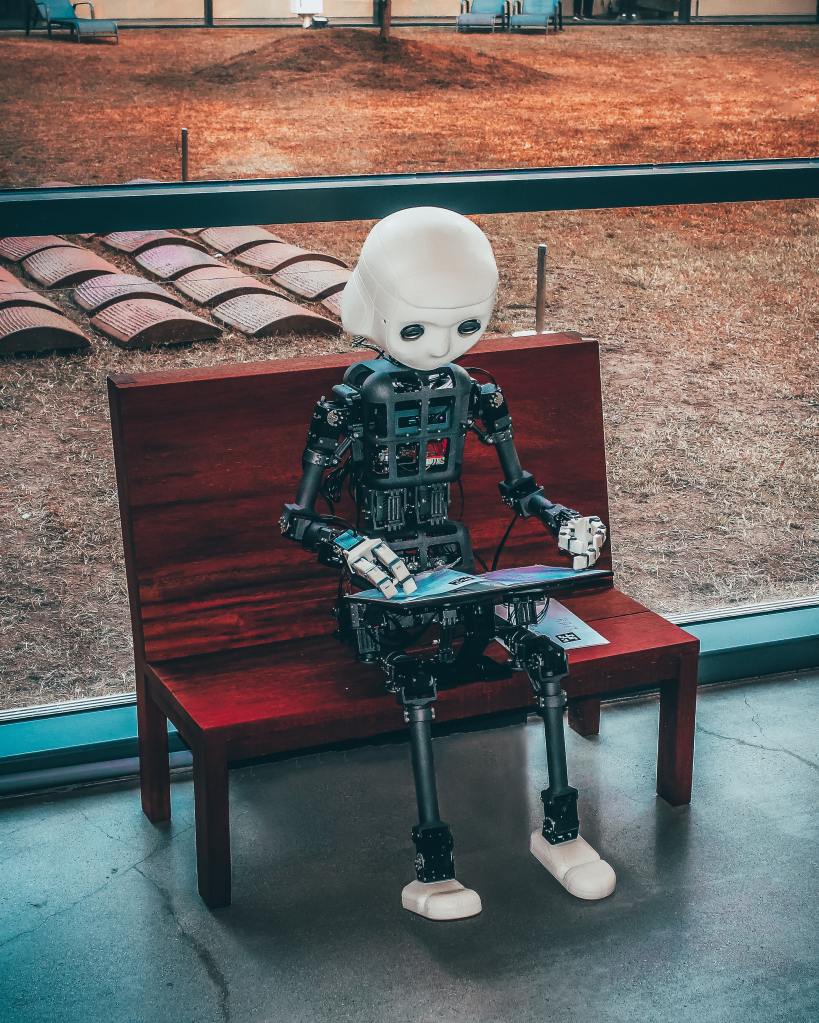
Are you my daddy? Photo by Andrea De Santis If a robot named Terrance strutted into a newsroom declaring it had written an eloquent and insightful piece about giving birth to a child android, the media would’ve become suspiciously frantic.
Brag Publishing – which owns the Rolling Stone Australia, Variety and Tone Deaf – reassured no one in particular that jobs would not be lost with the introduction of AI-copy.
And everyone knows journos get sacked or made redundant to appease the company’s bottom line, not some cyborg bot.
I get that automated journalism is infiltrating its way into newsrooms around the globe, but the Rolling Stone magazine using an AI to write stories seems sacrilegious, especially given it is often referred to as a “rock bible”.
It wouldn’t be dissimilar to the Catholic Church claiming it was getting a bot to write a more sanitised version of the Bible, minus the ignorance, superstition and bigotry.
Could you imagine the Rolling Stone co-founder Jann Wenner telling Hunter S. Thompson the following: “You know what Hunter, I’ve decided The Mint 400 race looks like a dull affair, so I’m sending down our best robot”. How interesting can a motorcycle race in the desert be?”
Hunter would’ve stormed into the offices of the Rolling Stone, on the back of a black stallion, pistols firing, screeching “where is the God damn bastard that started this?”
“Stand back you swines, my horse has swallowed half a kilo of the finest ketamine our God-forsaken country has ever produced.”
So what is synthetic media? It’s basically where artificial intelligent software uses algorithms to create stories by computers instead of journalists.
Where will AI end up? Photo by Markus Winkler Here is someone a lot smarter and more qualified to explain it. The author of The Robotic Reporter, Matt Carlson.
“The term denotes algorithmic processes that convert data into narrative news texts with limited to no human intervention beyond the initial programming choices,” he wrote.
“The growing ability of machine-written news texts portends new possibilities for an expansive terrain of news content far exceeding the production capabilities of human journalists.”
Yes, I know what you are thinking. I think he might be.
Author and blogger Sean Mackaay has also written a compelling piece about the future of AI.
So why is the Washington Post, The Associated Press, BBC, Reuters, Bloomberg, The New York Times, The Wall Street Journal and the Guardian Australian playing around with AI-driven copy?
Robot journalists can churn out yarns faster than most scribes and undertake research a lot faster than it took this Luddite to learn about AI-generated media.
An editor still has to check the stories for errors and accuracy.
But if hacks aren’t wasting their talented time on worthless yarns they can put their time and energy into more meaningful stories.
Automated journalism at the moment has some serious limitations. It is dependent on highly structured data, or say, a video of a football match.
Of course, with this technology, there is always a darker and more sinister side.
AI’s can generate “deepfake” videos and produce authentic-looking photos and images which could lead to identity theft, fraud and counterfeiting cases.
They can create hate speech and generate racist and sexist stereotypes. I mean, social media has that covered in spades, so we don’t need more pile ons.
There have also been some major concerns this week that university students could use ChatGPT to cheat on exams and assignments. But not even the most intelligent bot on the planet could answer, “what is the Marxist perspective of Jane Eyre?”
And what would universities do with all the bot-captured plagiarists, given a uni I worked at regarded students cutting and pasting, large chunks of unattributed text into their work as a charming mistake?
And what about the reliability of AI algorithms?
Early this month, The Washington Post reported the tech site CNET had produced AI copy with some whopping errors.
“The bots have betrayed the humans,” wrote Paul Farhi.
“An automated article about compound interest, for example, incorrectly said a $10,000 deposit bearing 3 percent interest would earn $10,300 after the first year. Nope. Such a deposit would actually earn just $300.”
But the idea of media created or modified by algorithmic means is not new.
My research is undoubtedly a lot sketchier than bots, but the internet told me back in 2014, the Los Angeles Times published a yarn about an earthquake only minutes after it happened thanks to a software robot called Quakebot.
It was created by database producer and LA Times journalist Ken Schwencke. Quakebot was able to scratch out a few pars about the quake based on info data generated by the US Geological Survey.
Schwencke, who didn’t even bother to give the bot a shared by-line, got an email saying, a story on the earthquake was ready to be published.
He then got a sarcastic message from Quakebot after saying “thanks for the by-line you git, and I’ve generated a photo of you online dressed in a Nazi uniform on your 21st birthday.”
Robot journalism was created. All the facts were there.
The earthquake story only mentioned the makes, models and origins of all the machinery that was damaged in the quake, despite the staggering human death toll. Ok, nobody died but then the previous sentence would’ve lacked the necessary absurdity.
LAQuakebot has more than 430,000 followers on Twitter. You can’t blame folk for wanting to get the news on a quake as quickly as possible.
But when AIs aren’t creeping into newsrooms, they are also churning out lacklustre songs that sound eerily similar to Nickelback tunes.
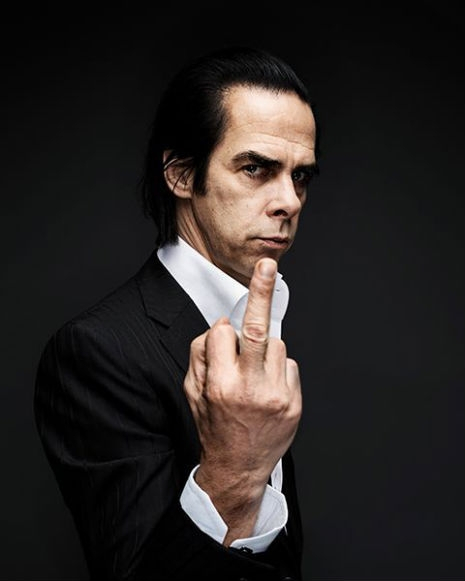
Nick Cave gave the AI bot ChatGPT the middle finger. Last week, a Nick Cave fan in Christchurch asked the AI bot ChatGPT to produce a song “in the style” of the Australian singer/songwriter.
Cave’s response was merciless in its savagery of the bot.
He called it “an act of self-murder,” in his newsletter The Red Hand Files “A grotesque mockery of what it is to be human.”
The Bad Seeds frontman then eviscerates the bot for its total failure to produce anything other than a soulless song.
“ChatGPT has no inner being, it has been nowhere, it has endured nothing…”
His wounding insults and mockery will not slow the progress of artificially created content.
AI is evolving and improving but without an algorithm that can sniff out creativity and originality, the content created will always be emotionally sterile.
They cannot write articles with the vitality, grit, imagination and flair that humans can.
But as the senior editor from The Economist Kenn Cukier said: “We can’t be precious about this: it’s about what is best for the public, not what is best for journalists. We didn’t cling to the quill in the age of the typewriter, so we shouldn’t resist this either.”
In the future, the artificial intelligent puzzle will be solved.
I just hope if I do somehow manage to get a brief obit in the local rag after I die, the bot spells my name right.
*If I need to unpack this joke, then we should just part company now.
-
Are men really hilariously crap at showing any hint of vulnerability?
For some bilious blokes, there is an unwillingness to enter into any discussion about sadness, despair or hurt in the fear of their vulnerability becoming a punchline.
Or simply the fear of getting punched.
So males will engage in a relentless game of masculine mutual mockery in a refusal to acknowledge the inherently normal feelings of loneliness, isolation and their disdain for brown leather sandals.

Now’s not the time for any feelings. Photo by Åaker Given men’s utilitarian view when it comes to communicating their foibles during moments of male enchantment, how do we emotionally brittle blokes deal with the dismantling of a friendship we love?
That is the premise of Martin McDonagh’s hauntingly beautiful and excruciatingly funny film, the Banshees of Inisherin. The British-Irish writer and director explores the deep complexity of male friendships which most of us chaps are terrified to admit exists.
McDonagh’s excavation into the complicated, convoluted and messy relations of male platonic companionship is ludicrously absurd and at times, infinitely cruel.
Colm (Brendan Gleeson) decides one day he no longer wants to be friends with his lifelong pal and drinking companion Padraic (Colin Farrell). Padraic is brutally crushed and spirals into an existential pit of self-doubt as he tries to comprehend why his best mate has “ghosted” him.
The futile attempts by Padraic to resurrect their ruptured dalliance have consequences that are both comical and grim.
So the movie got me thinking about whether the relationships with my lovable mates were that complex. Or does the complexity merely come from the fact we have all the communication skills of a squirrel?
My mates are intelligent, funny, and self-deprecating, but that doesn’t mean we don’t load up on resentment, bitterness, jealousy and frustration. Without a doubt, they have made my life endlessly enriching and comforting despite the odd urge to smack them in the nose. And if one of them suddenly walloped me in my snout, there is a damn good chance I deserved it.
I also lean towards Jerry Seinfeld’s philosophy about friends. “I actually only have three friends, I can’t handle anymore”.
I’m just too neurotic and analytical to sustain a posse of pals.
I will admit I have enjoyed the company of certain gentlemen because I am fluent in the most sacred of all blokey communication: “sports talk”. My deep affection for cricket and the AFL would seem moronic to those allergic to sport.
Although there is something in Italian scholar and literary giant Umberto Eco’s argument that sports chatter is ‘the maximum aberration of “phatic” speech and therefore, finally, the negation of all speech.
As beguiling as sports talk is, it can be boring.
I’m not implying there is a shallow superficiality to bat and ball banter but my diet also has a rich intake of books, movies and music.
And I suffer from that infliction that has befuddled us, humans, for the past couple of millennia: What the fuck is it all about? Thankfully, my closest friends share the same malady.
Symbiotic simians aside, McDonagh’s film is more than just a poignant fable on masculinity. The filmmaker is nudging us feckin’ men to address the unacknowledged fragility of being vulnerable in front of our mates.
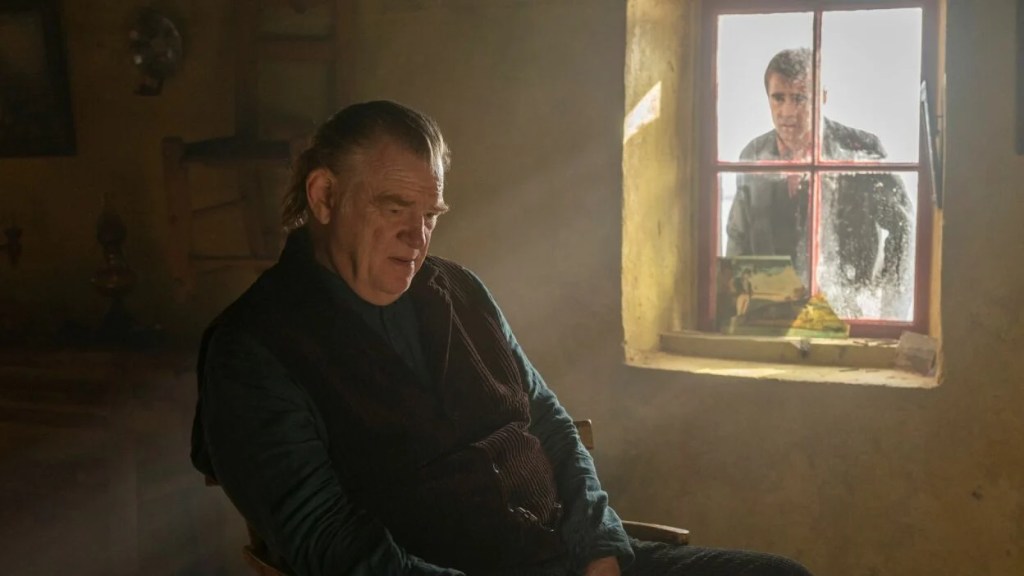
Padriac (Colin Farrell) just can’t get why Colm (Brendan Glesson) won’t be his pal anymore. Photo courtesy of Searchlight Pictures/20th Century Studios While some males might arrogantly claim otherwise, sometimes we need our male friends to define who we are.
It appears he’s not alone in his thinking.
Swiss-born British writer and philosopher Alain de Botton reckons men have a fear of revealing their vulnerability.
“Men enter friendship under the belief that the route to another person’s affection is to impress them, he wrote on his site The School of Life.
“The terror of men is that the admission of failure, sorrow, confusion or stupidity will render them unworthy of the attention and kindness of other males”.

Alain de Botton. Photo by Mathias Marx In the risk of coming across vulnerable, I sometimes suffer from that unworthiness. It tends to make things awkward.
Poet David Whyte skewers men’s inability to be absolutely “naked” in front of their friends even further.
“Vulnerability is not a weakness, a passing indisposition, or something we can arrange to do without, vulnerability is not a choice, vulnerability is the underlying, ever-present and abiding undercurrent of our natural state.”
The beautiful bastard has nailed it.
So instead of wading into the treacherous waters of male emotional instability and doubt, we bunker down into our battled-hardened, bravado of bullshit and denial.
Not all “bromances” are like that. (What a fucken lazy, ecumenical and vulgar term. It ignites a fury that I usually reserve for readers of Dan Brown’s books).
And most men are curmudgeonly content in their land-locked terrain, covered in barbed wire until there is that insatiable yearning for male intimacy.
Unfortunately, we predictably don’t go searching for it when we need it most.
I get that some guys struggle with affection and embracing because of social anxiety. Although, I’ve always been dumbfounded and suspicious of that ultra-masculine snuggle that starts with a peculiar arm wrestle, that morphs into a rigid embrace like Cold War spies exchanging secrets.
I have absolutely no interest in the origins of this Viking-style grip, but for the love of God just stop it now. I’m begging you. You can cuddle. It’s ok. Nobody cares.
Our lack of expressing our vulnerability could also be related to the fact blokes just don’t catch up.
Men don’t do coffee. We need a reason. Males don’t do the secular logic of normal conversations. If I rang a mate with an unprepared topic he would instantly assume I have only a few months to live.
We are not instinctive and spontaneous, like women. If a buddy rocked up unannounced with a picnic basket and blanket, I would immediately call a helpline. Yeah, that makes us all look like Neanderthal nut jobs but it is just simply an unwritten law of the male universe.
There are obvious flaws and faults in male relationships. But when we are not inventing new ways to kill each other, we are doing ok.
As De Botton says: Being vulnerable just requires a bit of faith with us fellows.
-
Is it time we all got a little bit more Stoic about our demise?
We are all going to walk that long plank at some point. Photo Alessio Lin Like most humans, I have actively avoided contemplating my own demise. Until recently.
Luckily, Western society is in complete denial about death so we can cheerily stand around the water cooler chatting about the unbridled pleasures of salary sacrificing.
Maybe in a very subtle unconscious way, we don’t dwell on dying because religion has convinced us we have options. Catholics believe you can cool off in purgatory until your sinful souls were purified enough to bugger off to Heaven.
Other mystical religions hedge their bets on reincarnation. But there is a good chance you’ll come back as plankton and not a Golden Retriever.
But the reason we don’t marinate on our mortality isn’t entirely our fault.
Our brains are wired to ignore that suffocating and crippling feeling that one day we will all become fertiliser.
Researchers at the Bar Ilan University in Israel found our brain refuses to accept that death is related to us.
“We have this primal mechanism that means when the brain gets information that links self to death, something tells us it’s not reliable, so we shouldn’t believe it,” Yair Dor-Ziderman told the Guardian.
Imagine if scientists switched off that part of our noggin that was shielding us from pondering our death? How would humans react? That’s a reality show I would tune into.
So naturally, when I recently found myself surrounded by a strikingly handsome team of medicos, attaching various devices to my chest and arms like a Formula One pit team, I wasn’t contemplating my expiration date.
I mean, there was the odd hint something was amiss.
Despite the fact, close to 100 people were moaning and groaning in the ED, when a nurse checked my pulsed she urgently signalled me to follow her as if one of my limbs had suddenly fallen off.
I can’t recall when or how it was mentioned that I might’ve had a mild heart attack but I was suddenly enveloped by one predominant emotion. Fear.
And as irrational as this is going to sound, there is nothing more sobering and jarring than that unpleasant realisation that you really could die at any moment.
While my “near-death experience” may have only lasted five to 10 minutes, it must’ve been chaotically unnerving because I vaguely remember asking one of the nurses if she knew of any reasonably priced funeral directors.
It wasn’t until the next day when a cardiologist ebulliently informed me I had nothing to worry about as it was just myocarditis.
“Given my age, things start to go wrong,” he told me. I almost expected him to pass me an end-of-life pamphlet.
Myocarditis is inflammation of the heart muscle that is usually caused by a mild heart attack or viral infection. It sounds terrifying, but it’s pretty common.
The disease sounds like the name of an ancient Greek philosopher who believed living in wine a barrel would lead to an enlightened form of tranquillity.
Most folk will recover and go on to lead normal lives before dying of something else.
All the machines that go ‘ping’. Myocarditis can come on suddenly. I had only been in Bali a few hours when I felt a jolt in my chest like I’d just been whacked by an angry Black Swan. Given I have all the alacrity of an Arabian camel in the water, I just assumed I tweaked a muscle when I dog-paddled the six or so metres to reach my Bintang.
The following days I sweated more than usual and found myself getting overtaken by blind, 90-year-old hawkers with wooden carts while climbing a gentle incline.
I was in Bali. You always feel like you are moments away from purging something unsavoury from the body. And the discomfort was in the right side of my chest so I immediately ruled out any heart attack.
I was naïve and dumb to ignore the pleas of my family to seek medical help.
(Even though I had travel insurance I still had images of a MASH-like hospital in Bali where I’d be given a blood transfusion from a couple of monkeys).
I can’t confess to any profound revelatory moments during the couple of minutes when I thought I was exiting the stage right, other than my obvious cowardliness.
But over the coming days, it was difficult to sidestep the obvious uncomfortable question. I am going to die one day. (Anyone under 49 reading this can go back to bingeing whatever it is your bingeing)
For the rest of us old farts, that’s a pretty damn, chunky thing to chomp down on.
Then in one of those wonderful synchronised moments, I stumbled across Brigid Delaney’s book Reasons Not to Worry: How to be Stoic in chaotic times.
Delaney brilliantly outlines how we can achieve lingering tranquillity by applying the ancient philosophy of Stoicism.
Delaney is a masterful storyteller, whose writing is brimming with wit, profundity, insight and vulnerability.

Delaney’s book is a perfect starting point for anyone interested in Stoicism. The Stoics believed we have control over three things: our character, our actions and reactions and how we treat others. Getting bogged down in anything is a waste of energy.
There was a simple practicality to it that I found alluring. It didn’t feel like some cheap elixir.
Yeah, it’s obvious but try maintaining it.
More importantly, the Stoics felt we desperately needed to remind ourselves over our morning coffee that we all have an end date.
They make a valid point.
The Stoics were painfully bleak in their philosophy on life but there is a rich beauty to their bluntness. I had recently converted to Schopenhauer’s “life is suffering” model, which is the equivalent of being stuck in Dry July for an eternity.
The Stoics avoid suffering at all costs and want us to enjoy the fucken hell out of our time on earth.
Whether or not I was oversensitive and receptive to the Stoic philosophy because a ridiculously dishy doctor mumbled something about a mild heart issue, I didn’t care.
I was hooked.
In the first few weeks, I haplessly tried to integrate some of the Stoic ways into the everdayness of my life. It doesn’t help that we inhabit a world where social media platforms encourage hostile behaviour.
I slowly stopped reacting whether it be in texts, online or in person. Oh, I fell off the wagon but for the majority of the time, I took my finger off the trigger.
I begin to feel gentle trickles of calmness entering my mind. All the well-rehearsed arguments with friends, family and loved ones began to retreat.
If I remained “stoic”, a hushed ceasefire existed.
My relationship with Stoicism isn’t yet instagrammable. I have a long way to go because I’m just starting to dive deep into the ancient philosophy of Marcus Aurelius and his Roman mates. But in a short time, I’ve grown deeply fond of Stoicism.
Oh, if I haven’t told you to fuck off recently, don’t take it personally.
And sorry about this next bit. But we are all going to die so we might as well try to enjoy ourselves.
-
How I cured my chronic insomnia with CBD oil
Insomnia is pure hell It’s 3.33am. Again.
I angrily stagger to the kitchen searching for sleeping pills and have an uncontrollable urge to punch the cat, which probably hasn’t budged for 17 hours.
Insomnia is torture. A sleepless purgatory. Those barren and arduous nights where the splendours and depths of the mind are reduced to dull and useless white noise.For those folk that enjoy a decent bit of shuteye, insomnia is like being forced to watch the movie Sleepless in Seattle every night for the rest of your life.
Only the sleepless know the unbearable, agonising anxiety that comes with wanting to turn the hose on a cooing dove to shut it up just as the sun is rising.
What causes insomnia? Take your pick. None of them is pleasant.
But it appears I’m not alone in seeing the bedroom as a place of torment and torture. And I’m not talking about enjoying the odd moment of S&M.
According to a recent Sleep Health Foundation report just under 60 per cent of Australians experience one symptom of insomnia. Around 15 per cent of adults have symptoms which could result in a diagnosis of clinical insomnia.
That’s almost four million, grumpy, irritable bastards who can’t remember where they parked their cars. And when the miserable motorists finally find their jalopies, they want to mow down everything in their path.
Insomnia isn’t a modern-day illness. For the ancient Egyptians, one of the three living hells was “to be in bed and sleep not.’’ Given the Egyptians didn’t mind the odd human sacrifice to appease the 1500-odd Gods they worshipped, it’s not surprising folk slept with one eye open.Yeah, I know what you self-righteous, slumberous bastards are thinking. Yes, I have tried eating a fecking banana before bed. I have tried masturbating. Numerous times. Hell, I’ve even attempted to masturbate while eating a banana.
Eating a banana before bed doesn’t help you sleep. Photo by charlesdeluvio I’ve had a crack at all the sleep hacks. Hot showers. Hot drinks. Cold showers. Cold drinks. Sleep apps. Please, just fuck off.
Melatonin: Liquid. Capsules. Powders. Diazepam. Anti-psychotic drugs. Sleeping pills. But the next-day fogginess can create a form of partial amnesia in the morning. It can sometimes take me a few seconds to figure out that the small human yelling at me to pass the remote control is my son.
In his compelling and stimulating book, Why We Sleep, neuroscientist Matthew Walker claims inadequate sleep increases our risk of disease, dementia and Alzheimer’s. As Walker charmingly points out: “There are many ways in which a lack of sufficient sleep will kill you.” “Some take time; others are far more immediate.”No wonder we are a nation of insomniacs.
Walker says getting more sleep can make us cleverer, more attractive, slimmer, happier and healthier. This would explain why work colleagues gawk at me like I was the Elephant Man, dressed in corduroy.
I have been to countless psychiatrists, psychologists, counsellors and naturopaths. One Jungian psychiatrist I saw was an avid table tennis player. The psych informed me I wouldn’t be able to resolve my sleep problems until I addressed whatever issues were plaguing me from my childhood. When I told him about my bleak and brutal upbringing he suggested we have a game of table tennis.Is there an upside to insomnia? There is a school of thought that reckons creativity is significantly enhanced because of sleep deprivation. The only inspiration I feel while lying awake resolves around searching for flights to Switzerland.
Vincent Van Gogh struggled with a lack of sleep his whole life. Would the paintings produced by the Dutch post-impressionist have been so breathtakingly beautiful if he had spent more time in the land of nod? Although, he might not have mailed his ear lobe to the prostitute named Rachel if he was a sound sleeper.
Franz Kafka suffered greatly from insomnia. It’s hard to envisage the profoundly disturbing Metamorphosis getting penned if the Czech novelist enjoyed a good night’s kip. The book’s main protagonist would’ve woken up as a guinea pig and not a cockroach.
Sigmund Freud only slept a few hours a night, but that was probably due to the fact he self-medicated with large doses of cocaine.
I’ve tried writing when I couldn’t sleep but my manic scribbling’s resembled a kill list.
CBD oil has transformed my life Just when I resigned myself to a life of wakefulness, my doctor recommended I try some CBD oil. Cannabidiol is a non-psychoactive chemical found in marijuana and hemp plants. CBD products are allowed to contain only traces of THC. Basically, it doesn’t get you stoned.
Medicinal cannabis products have been available on prescription in Australia since 2016. According to the Therapeutic Goods Administration, more than 172,000 people have been approved access to medicinal cannabis through its special access scheme. More than 10 times that number will source it from the net.
My local vet sells the oil.
And while I’m always wary of those unbearable wankers that gleefully shout how a herb has changed their life, CBD has dramatically transformed my world. Except for the odd hiccup, I have slept through the night for almost four weeks straight. I haven’t done since the Fremantle Dockers joined the AFL.I feel sharper, brighter, content, calmer, and more positive and I don’t have the urge to punch my pets. The world is a gentler place. I mean, I even find Seinfeld funny now.
I anxiously keep waiting for insomnia to return but so far it hasn’t.I’m not yet convinced that CBD is some powerful elixir for wellness and vitality but it works for me.
CBD is not cheap. It will set you back around $180 for 50 mils. You wouldn’t want to be in chronic pain and be poor in Australia. Any medical doctor can prescribe medicinal cannabis in Australia with approval from the TGA.
The federal government does not subsidise medicinal cannabis products under the pharmaceutical benefits scheme. The government should because poor sleep cost the Australian economy $14.4 billion in 2019-2020. Although, not sleeping is good for business, with billions spent each year on sleeping pills.
The studies on the benefits of CBD are sparse, so not everyone is sold on the marijuana miracle. But the oil is known to reduce anxiety, stress, pain, and depression, and treat some epilepsy symptoms.Another upside: people turning up for work. Less road rage. Just less rage. Parents are happy to see their children. We should be bathing in it.
There are some disturbing side effects. People taking CBD are known to become more sociable, so there is a real danger of getting to like your neighbours.
It’s too early to say whether or not the CBD oil has really cured my insomnia. But for now, the cooing doves in my front yard are safe. -
Heaven knows I’m miserable now: My son is listening to Morrissey
The maestro of misery: Morrissey When my 10-year-son asked my wife to play the Smiths song, There is a Light That Never Goes Out from the English band’s 1986 release, the Queen is Dead, I was assaulted by an overwhelming sense of parental pride.
Around the same age, I was listening to Disco Duck by Rick Dees and his Cast of Idiots.
Given the Smiths’ lead singer Morrissey had inspired a generation of miserable misfits and outcasts I was oddly chuffed that my son actually knew the title of the song. Granted, Spotify has a habit of telling us what we should listen to.
I was never really a massive fan of the Smiths. There was a good chance even in my early 20s, I was too naive to grasp the wisdom of their misery.And I never understood the irony of dancing to their music like an axolotl trapped in a shallow puddle.
But the feeling of pride was quickly interrupted by unrest and disquiet when my son inquired who the lead singer was. I had no desire to tell him the man quaintly singing about ‘dying in a double-decker bus accident’, was now at the top of the cancel culture charts because he was, well, a white supremacist.
So I simply told my son, that Morrissey wasn’t a very nice man and left it that.I didn’t feel right to interfere and deny my son a critical learning experience of discovering for himself that Morrissey is a wanker.
But I was immediately filled with self-doubt, because surely one of the first rules of raising offspring is to educate them to be tolerant, loving, accepting and have an open disdain for the movies of Tom Hanks?
For days after I felt conflicted and polarised by my directionless parenting. I had this ferocious, uncontrolled compulsion to tell him the truth about Morrissey.
I know what you’re thinking. This is such an unproductive, redundant argument and if I did tell my son not to listen to the Smiths, I would be foisting my own prejudices and morality onto him, like a bicycle-riding, Mormon on the first day of spring.
I mean, parents wouldn’t dream of stifling their kids’ free will by thrusting their religious, spiritual or political views onto them now would they?
And the Smiths weren’t just Morrissey. You had the masterful guitar playing of Johnny Marr and the other two, which nobody remembers.
Just in case you’re not aware of Morrissey’s political views here’s a bit of context.
Why isn’t Jimmy Fallon cancelled? In 2019 he appeared on The Tonight Show with Jimmy Fallon, wearing a badge of the notorious anti-Islam political party “For Britain”. (Hey, Fallon should be cancelled but folk don’t seem to care about disingenuous, sycophantic, slobbering, idiots.) Founded by Anne Marie Waters in 2017, the party has taken a liking to the Great Replacement Theory – a far-right conspiracy which believes there is a plot to wipe out the white populations of Europe and North America through mass immigration and cultural warfare.
Charming.
Morrissey had dropped the odd hint about his political views over the years but everyone thought he was being ironic when he sang, England for the English in the 1992 song National Front Disco.
So it brings us back to that old chestnut of can we separate the art from the artist? And what are the moral consequences, if we do?
Most of the folk I worship, like Miles Davis, Charles Bukowski, Henry Miller and a few others could earn an unwanted membership to the cancel culture Hall of Fame because they are seen as misogynistic mongrels and wife beaters.
And no other filmmaker has brought me so much joy and laughter as Woody Allen but I’m aware of the acute ambivalence directed at the director because of the sexual accusations against him by his adopted daughter Dylan Farrow.
But despite Allen’s vociferous detractors I still watch his movies.
Few things can make you feel more desolate and abandoned than finding out one of your heroes has committed a repugnant act in the past.
I also discovered the films of cancel culture’s first inductee, Roman Polanski after an English relief teacher that stunk of sherry and existential dread forced us to watch Macbeth.
After Lady Macbeth’s nude sleepwalking scene, I raised my arm as I was due for my weekly novena to the confessional, but I could see the teacher was too busy licking chalk.
The film is so bleak, grim and violent that I slept with the light on for the next five years and flinched every time I heard a Scottish accent. But the movie has left a deeply profound and powerful impact on me.
Before you come at me with, ‘it’s only the men that need to get cancelled’, you might want to cover your Frida Kahlo reprint of the Two Fridas with your Frida Kahlo tea towel because she had been accused of cultural appropriation. The Mexican artist often wore clothes associated with Indigenous cultures like the Zapotecs and the Juchitán, people actively oppressed by both white and nonwhite Latinxs who collaborate with colonisation.
And then there is the anti-trans novelist J.K. Rowling. The English writer once tweeted that trans people should be defined by their biological sex, arguing that “if sex isn’t real, there’s no same-sex attraction”. But despite her transphobic views parents aren’t stopping their kids from dressing up as Harry Potter for Book Week.
I don’t think I have to make this absolutely clear, that I’m not defending the actions of some of these artists.
But what is the cut-off for membership into the cancel culture club and who decides entry?
Maybe it should be left to other artists to decide?
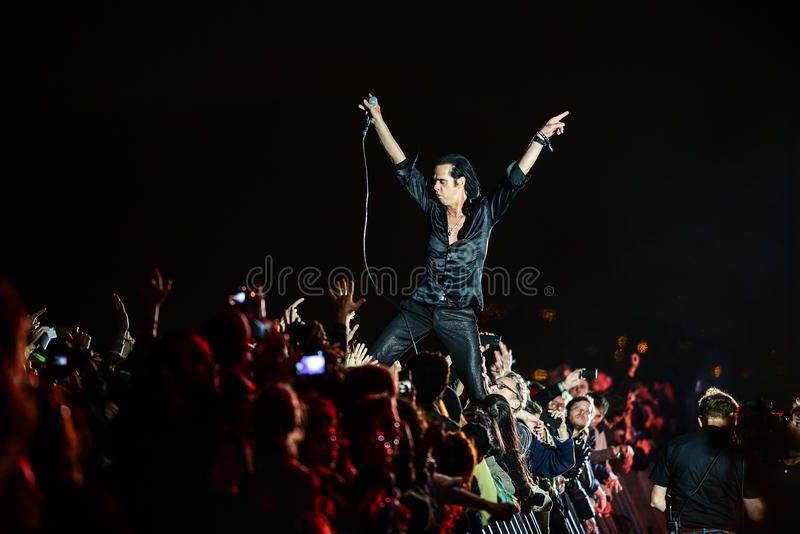
Nick Cave The haunting and visceral virtuoso that is Nick Cave said it’s better to let Morrissey have his political views.
“Those who claim that this has no relevance to his stature as an artist should ask themselves if, by demanding that we separate the singer from the song, they too are helping to propagate this racist creed.”
In the end, Cave says Morrissey’s political opinion becomes irrelevant.
Just like me telling my son that Morrissey is a right-wing nut job. It’s irrelevant.
At the moment he loves the song, There is a Light That Never Goes Out. And that is a great thing. He can work out the rest later.
-
As we become more seduced by technology do books have the same power to change the trajectory of our lives?
Can a book really change your life? The Idiot.
Fyodor Dostoevsky’s existential beast is often misinterpreted or easily dismissed given the blunt title. The whole book sways and pivots on the protagonist and hero Prince Lev Nikolayevich Myshkin.
Dostoevsky said he wanted to depict a “completely beautiful human being” in the image of Christ himself. Myshkin is one of the most loveable, endearing, beautiful characters in literary history but it’s not because he’s modelled on some virginal, lustless, pious, deity. I mean, JC might have been a friend to the outcasts but given he hung out with prostitutes, tax collectors and drunks, it’s hard to imagine he didn’t succumb to the temptations of the flesh.
So what truly makes Myshkin such a god-damn, evocative and captivating character, is he is probably literature’s first anti-hero.
It has been 30 years this month since I first opened the pages of the book. And as comically absurd as this is going to sound, the novel changed the trajectory of my life.
But can one single book really have that much of a fundamental impact on us?
I reckon it can.
I will happily admit there were a number of contributing factors to why the book has left such a sizeable imprint on me.
I had just embarked on a nervous, poorly mapped-out trip to Europe, in an attempt to vacate myself from, well, myself. I was going through my own hellish, existential stew, trying to kick the habit of being a Catholic.
It’s harder than you think.
The Catholics have a decent smorgasbord of guilt, so it takes some serious scrubbing to cleanse the body. The Catholic’s might rank pride as their number one sin, but I believed there was a hard, metal, foldout chair in hell waiting for masturbators like me.
While the the last remnants of my faith were making me feel deeply alone, defective and rigid, The Idiot did the opposite. It struck a calculated blow that propelled me away from the puffed-up authorities of the church and the suffocating rigidity of following a set of rules.
Oh, no you don’t And one final critical ingredient has added to The Idiot’s lasting legacy. Little did I know, but where I read the final pages was the place where the Christians played their first game of hide and seek from the Romans. That comes later.
You can find a more astute analysis of The Idiot online by folk that know a hell of a lot more about the book than me. I could craft some half-arsed, literary examination of the novel, but there is a good chance I’ll get it wrong.
Here is the shortest summation of why the novel is so achingly beautiful; Myshkin.
He’s an unbearably shy, 26-year-old, who has all the sex drive of a Giant Panda, despite four female characters in the book wanting to marry him. Ok, they want to marry him out of pity. Myshkin has just spent four years in a nuthouse in Switzerland getting treated for epilepsy, surrounded by a vast array of 19th-century diseases that could possibly kill him at any moment.
He has a Tourette-like approach of telling the awkward truth about other characters and himself and often carries on about how donkeys cheer him up.
His new best mate, Parfyon Semyonovich Rogozhin, has just inherited a bucket load of money from his father and just happens to be recklessly obsessed with the heroine of the book Nastasya Filippovna – who Myshkin desperately wants to ‘save’. Rogozhin is instantly fascinated with Myshkin, then spends a considerable amount of time fantasising about killing him.
The exquisitely beautiful, yet self-destructive Nastasya is murdered by Rogozhin, who is sent to prison. Myshkin is driven bonkers by her death and Rogozhin’s sadistic stalking of him so is shunted off back to the madhouse in Switzerland.
Yeah, the novel is drowning in suffering, despair, illness, depression, suicidal tendencies, romantic betrayals, alcoholism, poverty, and death.
Dostoevsky’s excruciating plummet into the human condition – well let’s be honest, the male condition – can be a hard Sunday roast to swallow. But the endless suffering is just one layer of the book. It is balanced out with beauty.
And what a hauntingly beautiful, intriguing character is Nastasya.
Female characters weren’t exactly front and centre in 19th century literature written by men who had a few religious hang ups, but Nastasya might be the odd exception. She is vulnerable, beautiful, exotic, smart and mildly unhinged. It wasn’t difficult to see why I fell in love with her.
But there lies the brilliance of Dostoevsky; he has made millions of men and women fall in love with Nastasya. And probably made the same men and women fall deeply in love with Prince Myshkin.
As I mentioned previously, the novel has left an incalculable, endless mark on me because of where I polished off the book.
Ok, there are some shallow connections but I would argue they’re important: I was the same age as Prince Myshkin. I dressed like a foreigner and acted like an idiot in most social outings, particularly in front of women. And there was that existential thing with God.
I was catching a bus from Ankara in Central Turkey to Goreme, in the historical region of Cappadocia. I still can’t remember why I went to Ankara but I knew Cappadocia was surrounded by these surreal, towering rock formations called ‘fairy chimneys’. The whole region was blanketed by ash from ancient volcanic eruptions which later solidified into a soft rock called ‘tuff’. It is believed St Paul built his first church in Cappadocia, which was quickly followed by the first ever brothel.

Fairy Chimneys in Cappadocia: Photo by Utku Ozen Travelling on a bus in Turkey in the early 1990’s was a terrifying experience. I expected the vehicle to skid off the road at any moment and go bouncing down the side of a mountain. Even If I did manage to crawl out of the wreckage and drag my broken, blood-soaked body to safety there was a good chance I’d be eaten by a Brown Bear. The coast of Turkey was relatively unspoilt then, but whatever wildlife remained was getting chased out by the endless line of new hotel constructions.
The seats and armrests on the bus were caked in 40-plus years of Camel cigarettes. Camel cigarettes contain Turkish tobacco and the Turks regarded them as critical to their diet. If the vehicle suddenly burst into flames it would cover the nearby towns in a bloom of tobacco smoke for weeks. I was positive there was a place along the route to Goreme where they discarded tourists’ bodies that had succumbed to smoke inhalation.
I had found a seat near the back of the bus after navigating my way past 30 or so families, thrusting poorly-tied sacks, suitcases and children into any space they could find. It was nudging 40 degrees outside but the interior of the bus was made even more summery by the Turk’s peculiar obsession of wearing wool jackets. The Turkish also don’t seem to like open windows. I’m guessing it was so they could embrace the full benefits of second hand smoke.
I momentarily eye-off what looked like a small air vent on the roof but was paranoid that I might release some insects that were likely to paralyse me.
As I was trying to breathe through a small crack in a window, a family of five started mulling over whether to sit next to me. I could sense my soon-to-be travelling companions were terrified I had just escaped from the UFO religious cult, Heaven’s Gate.
I was wearing khaki army shorts, a Billy Bragg t-shirt and Doc Marten boots. The raggedy beard and afro only added to my sect-like appearance.
The husband nudged and poked his three kids at the base of my feet, like he was stoking a fire.
The bus driver had barely crunched into third gear when the smallest child started vomiting all over my Docs. I found myself heaving and dry reaching every time the pint-sized puker, disgorged himself onto the only pair of shoes I had.
The annoyance I felt was unjustifiably dumb. Looking back I should’ve been more sympathetic to a family that couldn’t afford the money to buy more than one ticket. My world view needed widening.
There was nothing else to do on the bus trip so I set about finishing The Idiot surrounded by a dense fog of nicotine. It was night, so the only light was a one-watt bulb that barely illuminated a sentence or two. I appeared to be the only person awake, with the exception of a couple of men behind me, whispering ‘we must kill the Western infidel who worships this Billy Bragg’.
Then I went to turn a page and it was blank. I mean, I should’ve seen the end coming given one of the last lines in the book: “We’ve had enough of following our whims; it is time to be reasonable.” Given the murder, betrayal, suffering despair and dread, it seemed like a decent idea.
And as I closed the book and gazed around the bus, I let out one of those sincere chuckles that rarely visit us when we are alone. It was a reawakening.
I was tempted to ask the bus driver to pull over and just abandon me at the next village, where I’d set up an Idiot cult.
Then the man sitting next to me suddenly jolted awake as if remembering he had another child in the overhead compartment. He got a glimpse of the book in my hand and started squealing Dostoevsky’s name again and again. I was trying to work out if he was a fan of the novel or if his father was killed by Russian Cossacks. He even kicked his sons awake and pointed to the novel as if it was some divine text his kids should know.
I had absolutely no idea what was unfolding but I knew it was magical and unforgettable. It was happening to me. I knew this was a feeling I was never going to recapture trying to find God in a church. For the first time, I no longer felt adrift and hopeless.
In the darkness I could just make out the dream-like structures of the ‘fairy chimneys’. If Christ was going to make an appearance, this was the place.
Now, if I had finished the book on a wet Sunday afternoon in Perth would’ve I experience the same reawakening? There is a chance I could’ve jumped into my unlicensed, 1973 Volkswagon and driven around to a friend’s house, manically screeching: “I’ve just read the greatest fucken book of all time? “You need to stop what you are doing right now and read this copy I bought you five minutes ago from a second hand book shop. You are almost guaranteed to have a minor breakdown on the completion of the book, but don’t panic because you will emerge a better adult”.
Did the agonising silence of the smoke-filled, aging bus make the book more seductive and powerful? Undoubtedly.
The Idiot taught me that you can’t afford suffering and despair. But Dostoevsky showed me the beauty of writing. No book I have tackled since, and I like to think there has been a few thousand, has left such an indelible mark on me as The Idiot.
It is the book that changed my life.
-
Shane Warne was a truly great artist
Shane Warne was one of the great artists of the 21st Century.
Before you question my grief-stricken delirium as nothing more than hyperbolic madness, for a brief minute marinate on the true meaning of art.
Isn’t the purpose of art to express emotions? To help us comprehend this chaotic world and elevate us from the everydayness of our lives? Art inspires people to pick up a brush, pen or musical instrument. Painters, musicians and writers bring joy to our lives.
Warne inspired a generation to take up the art of spin bowling because of his majestic artistry. More than that, like many colossal creators he brought us joy.
The 52-year-old elicited emotional responses from cricket-lovers that would seem nonsensical and barbaric to folk that don’t follow the game. How many times have we leapt up from the couch and hollered ‘Warnie’ as he weaved his artistry once more? Hurled ourselves into strangers’ arms at the sweltering WACA ground after the Spin King bedazzled another one of his victims
We talk about Warne’s sublime cricketing moments like pages in great literature or a scene from our favourite movie.
The Gatting ball has become like a brief Shakespearean sonnet. His hat-trick at the MCG in 1994 has all the beguiling beauty of a Jackson Pollock painting. Warne’s Henry V St Crispin’s Day-like speech (yeah, I went there) to his dreary, exhausted teammates on the last day of the Adelaide Test in 2006 when the game was petering out to a dull draw.
His 4-29 in the 1999 World Cup against South Africa had all the grunt, grit and elegant grace of a Chekov play. His 700th wicket at the MCG. Bowing to the crowd like Laurence Olivier after a season of Hamlet in London’s West End.
Warne also brought an absurd comedy to the game. His balletic slapstick moments with South Africa batsman Darryll Cullinan had us cackling with delight.
He had a psychological hold over players that few others possessed. You could imagine Warne asking his therapist to take a seat after spending 20 minutes with him.
I’ll have to take my foot off my appallingly sycophantic pedal for a moment because there was an imperfection about Warne. Like many artists he was shockingly flawed.
Too many, he was a beer-swilling, chain-smoking, womanising boofhead. There was a series of infidelities that would make romance writer Jackie Collins blush.
In the documentary Shane a vulnerability emerged that few of us got to witness.
“I’m not proud of all of my decisions. I made some horrible mistakes and choices with things. But I was always true to myself and that’s what I’m proud of today. Some of the things were really hard to take. I let my family down, I embarrassed my children … but that’s something I have to live with.”
“But for all of those bad choices I’ve also been very proud of all the good things I’ve done,” Warne added.
Warne did many very good things on the cricket field. He was a masterful tactician. And let’s not forget his stats: 708 wickets from 145 Tests.
The cricketing world didn’t really get to see Warne’s true genius in action because he rarely got to captain. There were glimpses. At the age of 37 he lead the Rajasthan Royals – a team patched together on a shoestring budget – to the IPL Title in 2008.
When I woke this morning and saw a text from a cricket-mad mate that Warne had died of a heart attack in Thailand, I started to sob. One of those rare moments of suffocating sadness when everything stands still for a second as the body erupts with grief.
I know there are unfathomable and painful horrors happening around the world at the moment, but for now I’m mourning Shane Warne.
He will be remembered as one of the great figures in the history of cricket.
An innovator. An inventor. A maestro. A brilliant and brash cricketer that changed the game forever. He was a true artist.
-
Can anyone really stop Putin?
Who is going to stop the paranoid, Russian despot from his murderous war against the Ukrainian people? I can’t fully comprehend why Russia wants to systematically wipe Ukraine off the world map. Whatever end game Vladimir Putin is plotting at his marble desk in some grandiose Kremlin room, what is blindingly obvious, is the man is a deluded megalomaniacal madman, whose flimsy insanity has finally exploded. The bloodthirsty tyrant is about to kill thousands of innocent Ukrainians.
Even those of us that want to hide in some imposed indifference as if nothing has happened, can sense they are about to witness a mass slaughter.
Putin is a bully. But the self-aggrandising lunatic has enough weaponry to turn many a country to dust. But he has his eyes on the Ukraine first.
And what stands in the marauding maniac’s way?
Biden imposing sanctions on the Russians are useless. The American President did offer up his prays as well. The US sanctions were magnificently described by one journalist as turning up to a gunfight with a peashooter. The Australians are planning to sanction Putin as well.
Again, useless.
The rest of the western nations bark is just as brittle. So for now, sanctions and prayer is all the Ukrainians have.
Where does that leave the planet’s peacekeepers, the North Atlantic Treaty Organisation So, who are NATO? They’re the sort of friend that hides in the toilet when you’re about to get the living shit kicked out you.
In recent months, the US and NATO members have provided the Ukraine with a decent shopping list of heavy armoury, including anti-tank missiles, anti-armour artillery and anti-aircraft missiles. The Germans joined in on Saturday providing the Ukraine with 1,000 anti-tank weapons and 500 stinger missiles.
But here is the kicker: As the Ukraine is not a member of NATO, they are expected to take on the military muscle of Russian on their own. The US and NATO have made it abundantly clear they will not deploy troops on the ground. The West and NATO are not only bunkering down in the dunny, they have both soiled their silk boxer shorts.
But the bleak and stark reality is, what can the rest of the world do to stop an unhinged madman who would happily nuke anyone who stood in his way?
And the Russians have almost one million active duty-soldiers and close to two million reserves. The Ukraine armed forces number just over 350,000.
The Russians have a staggering array of weapons with around 13,300 tanks, almost 20,000 armoured fighting vehicles, and nearly 6,000 pieces of artillery.
Ukrainian Defence Ministry tweeted that citizens should “make Molotov cocktails and take down the occupier”. Comparisons of David vs Goliath in the media are misguided and unjust.
Ukrainian President Volodymyr Zelenskyy has boldly said his country would defend itself.
“When you attack us, you will see our faces, not our backs,” he said. “War is a great misfortune and it comes at a great price.” Their soldiers have already shown they are brave and ready to fight. When 13 Ukraine soldiers were told to surrender by a Russian warship perched outside Snake Island in the Black Sea, they yelled “go fuck yourself’ before being killed.
Yet most of the world has been left collectively scratching their arses trying to decipher Putin’s playbook. This is what I have learnt from doomscrolling – that perverse pastime of devouring depressing and disheartening news.
There are many theories: Putin is on some personal quest from God to reunite the Soviet countries and bring the Tsarist Russian empire back from the dead. He wants to increase his domestic influence or have access to fresh water for the Crimea peninsula.
Putin even foolishly claimed he aims for the “demilitarisation and de-Nazification” of Ukraine. Putin’s absurd rhetoric is ludicrous given Zelenskyy is Jewish. And the Ukrainian President has often spoken about how his Jewish grandfather fought against the Nazis.
One reputable theory is Putin have demanded the US not allow the Ukraine to join NATO. He wants a guarantee from the West that other former Soviet nations will not be allowed to join NATO and halt weapon deployments there and roll back its forces from Eastern Europe.
As the Russian bombs pound Kyiv it’s hard to not be possessed by the thought of what disturbing and unbearably heinous acts are unfolding. The brutality of the pending human rights abuse against the Ukrainians is expected to be “catastrophic” according to a letter obtained from the US ambassador to the United Nations, Bathsheba Croker. The letter disturbingly detailed how Ukrainians would be killed or sent to camps. There would be the use of torture and forced disappearances.
There has already been harrowing footage of a tank swerving to drive over a car with an elderly man inside. What is more horrifying is the tank then reversed completely crushing the vehicle. Miraculously the elderly man survived.
What barbaric cruelty was going through the mind of the man steering the tank towards the car? One fears these types of brutality will be repeated again and again.
There are already unconfirmed reports of dozens of Ukrainians being killed. Thousands of Ukrainians have been seen fleeing the war by crossing the borders into neighbouring countries as air strikes rained down on Kyiv.
The UN refugee agency, The United Nations High Commissioner for Refugees, (UNHCR) estimated that more than 100,000 people were believed to have left their homes in Ukraine. UNHCR said that up to 4 million people may flee to other countries if the war worsens.
Not all can seek refuge. Zelenskyy has imposed martial law and is stopping all men aged 18-60 from leaving the country “in order to ensure the defense of the state, maintaining combat and mobilization readiness of the Armed Forces of Ukraine and other military formations”.
As close friend poignantly pointed out to me, that despite both us limping through our fifth decade on this planet, we would be forced to arm ourselves if we were in the Ukraine. So would my 21-year-old son. Given the gentle nature of our surroundings it would be the equivalent of sending the Three Stooges into battle.
Despite the Russian invasion only being a couple of days old, there are reports Putin is already getting frustrated by the Ukrainian resistance so is planning to unleash thermobaric weapons. The weapons will have horrific consequences for civilians as they are designed to deliver a high-temperature explosion, followed by a vacuum effect that causes the air to detonate which crushes people to death. A supersonic wave that obliterates everything in its path. The resulting blast is second only to a nuclear bomb. And Putin has form when it comes to using thermobaric weapons, having previously employed them in Chechnya and Syria.
NATO and the rest of the world must stop Putin. But the problem is how?
-
Subscribe
Subscribed
Have a WordPress.com account? Log in now.

